
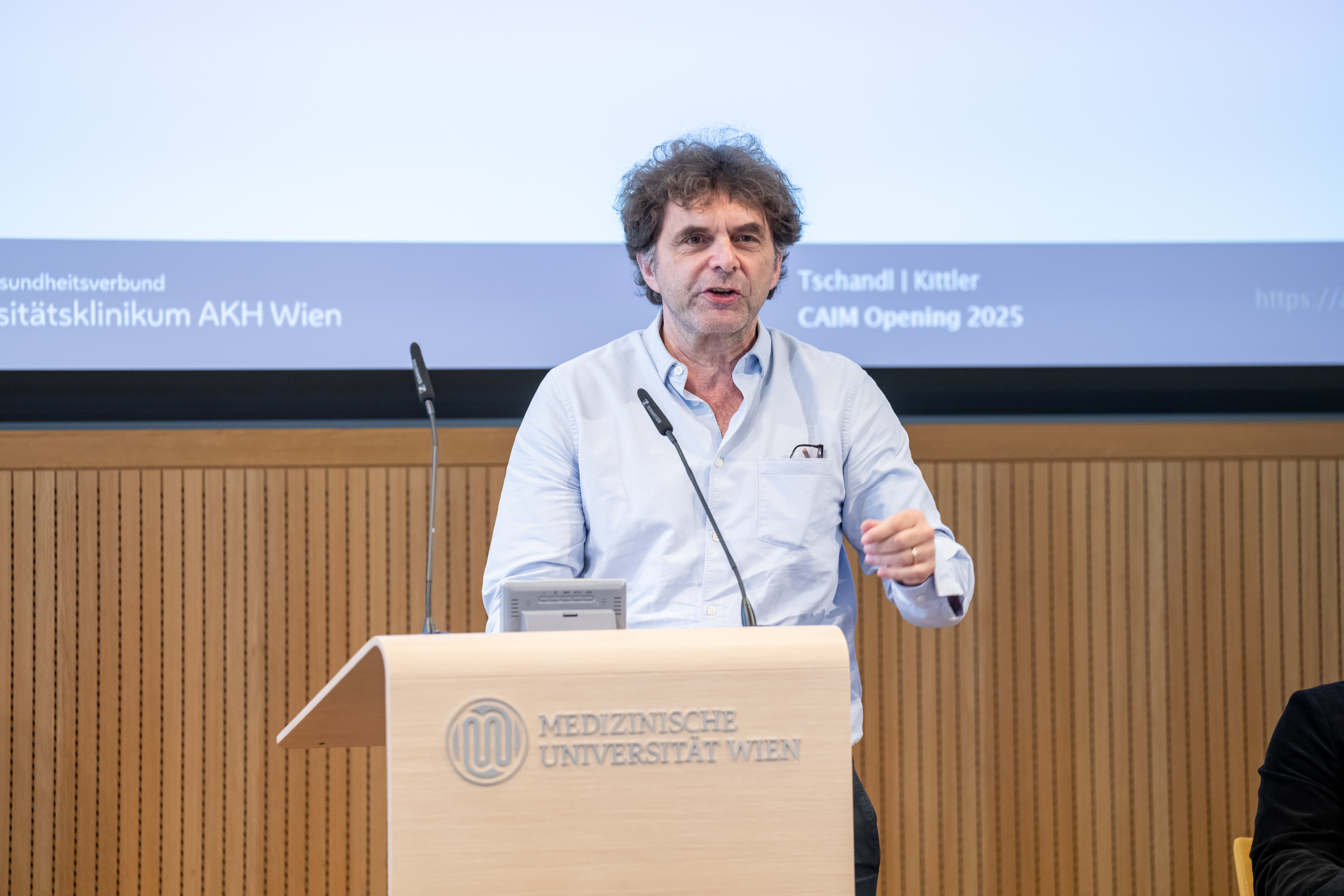
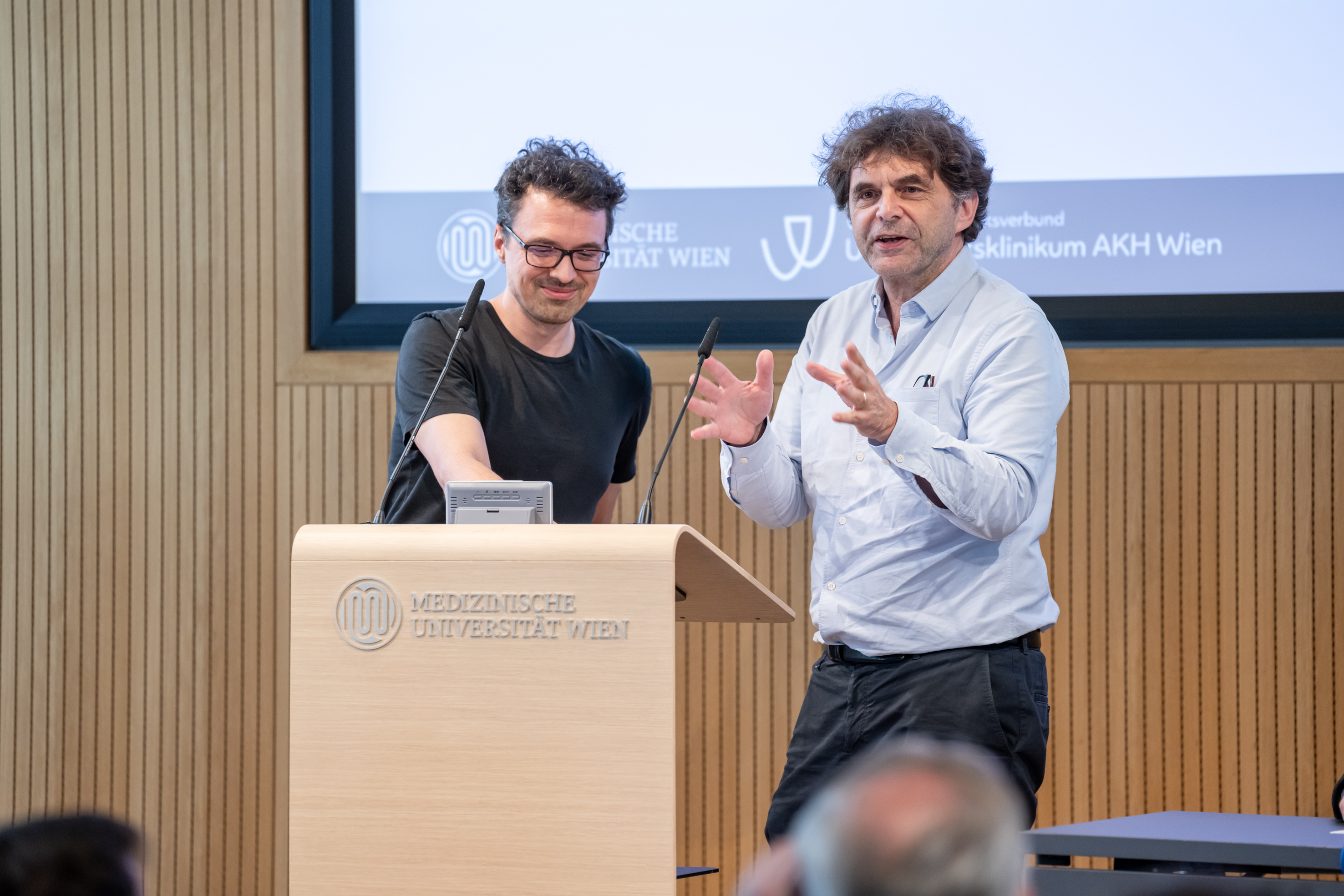
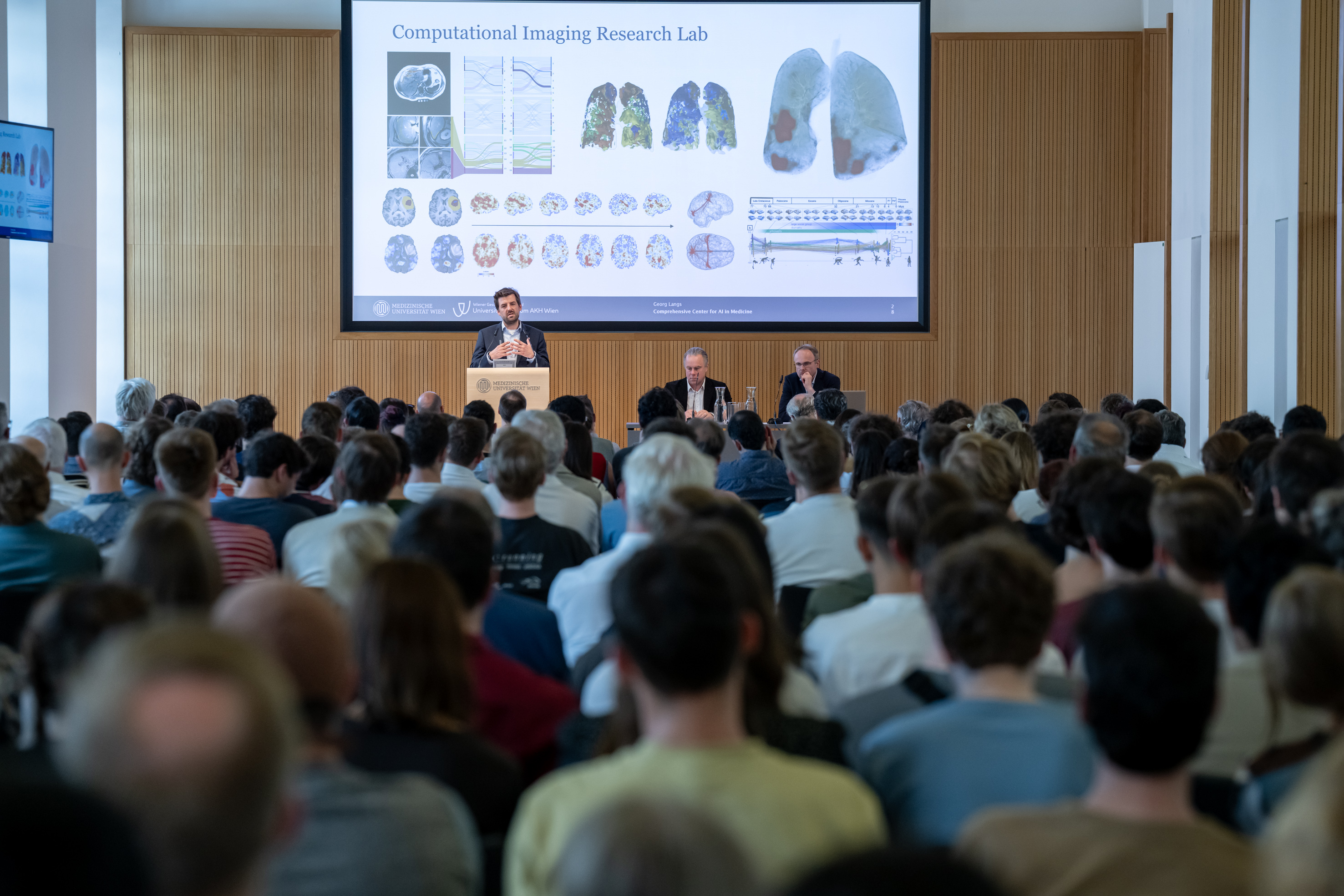
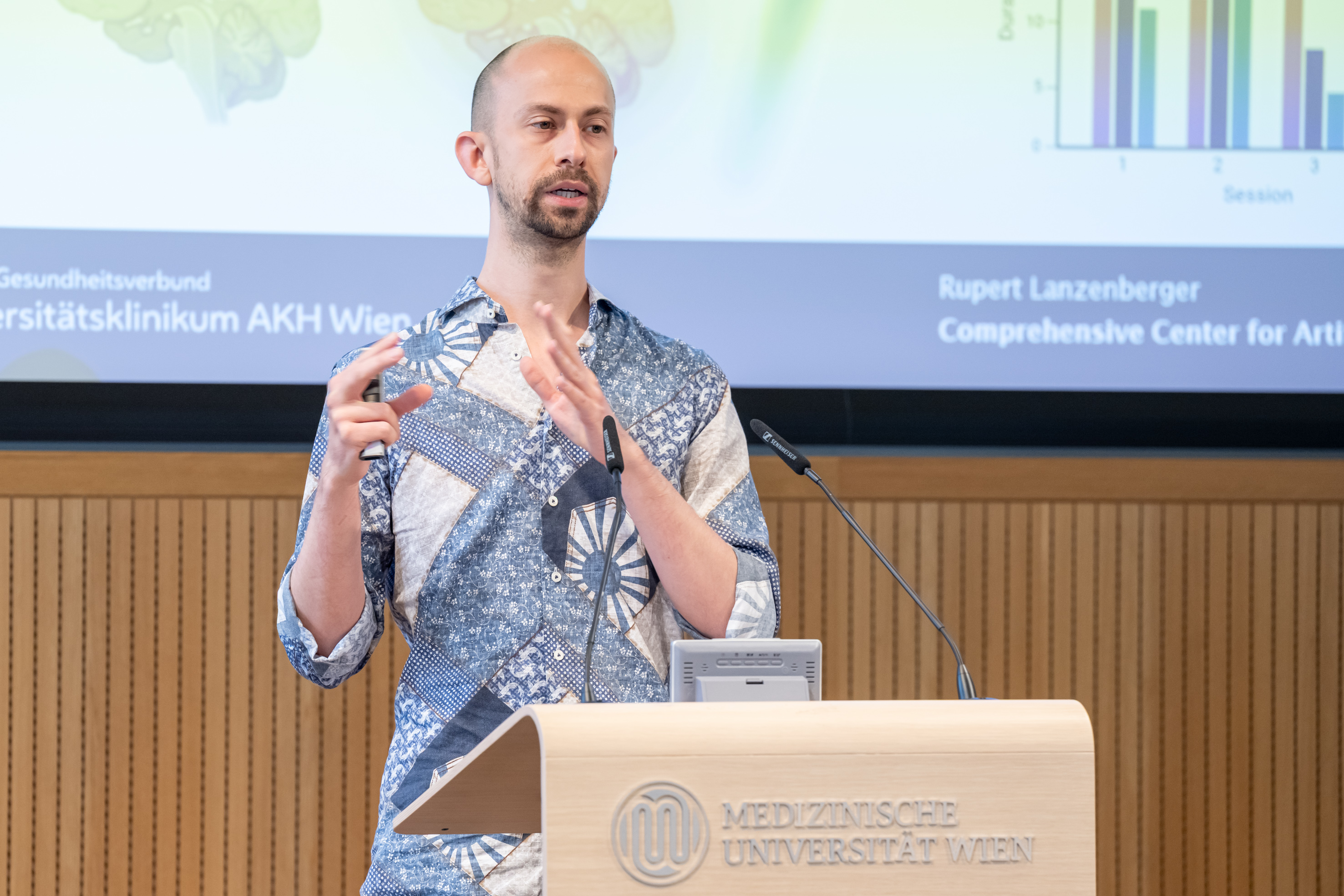
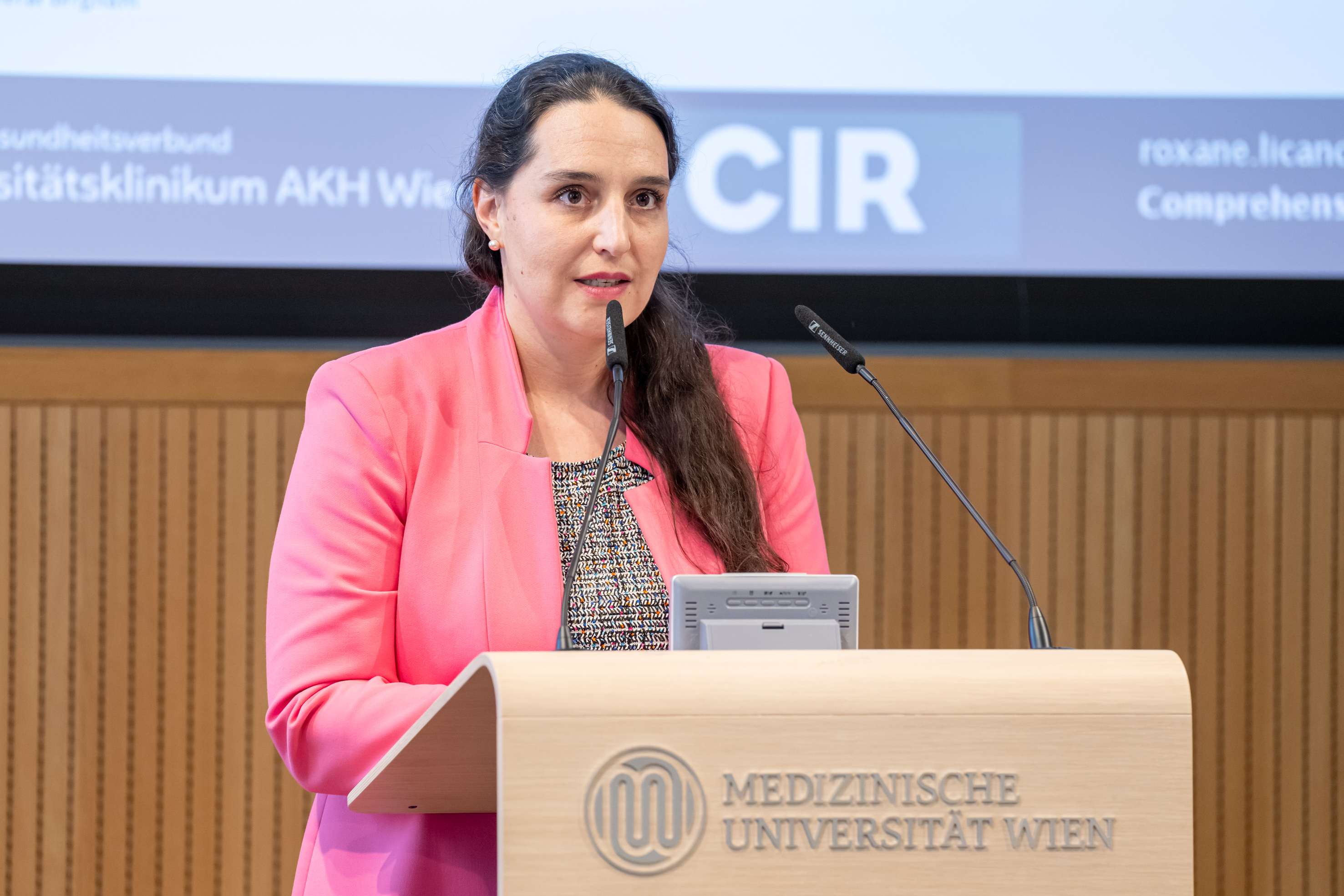
On June 4th, the Comprehensive Center for AI in Medicine celebrated its opening with a rapid fire science slam together with more than 300 participants, during which the inaugurial principal investigators gave insights in their work and their vision for how AI will change medicine and science.
Rektor Markus Müller opened with a talk on the role of AI in medicine, and how it motivates us to reflect on human intelligence and the discruption caused by technological advance. Georg Langs discussed three among the reasons why CAIM has started as an initiative driven by the PIs: the need to link cutting edge research in machine learning and precision medicine and prevention, the value of talent and the environment we provide to attract, support, and educate creative scientists in this field, and finally the hard questions in medicine that are yet unanswered.
Photos: Robert Harson
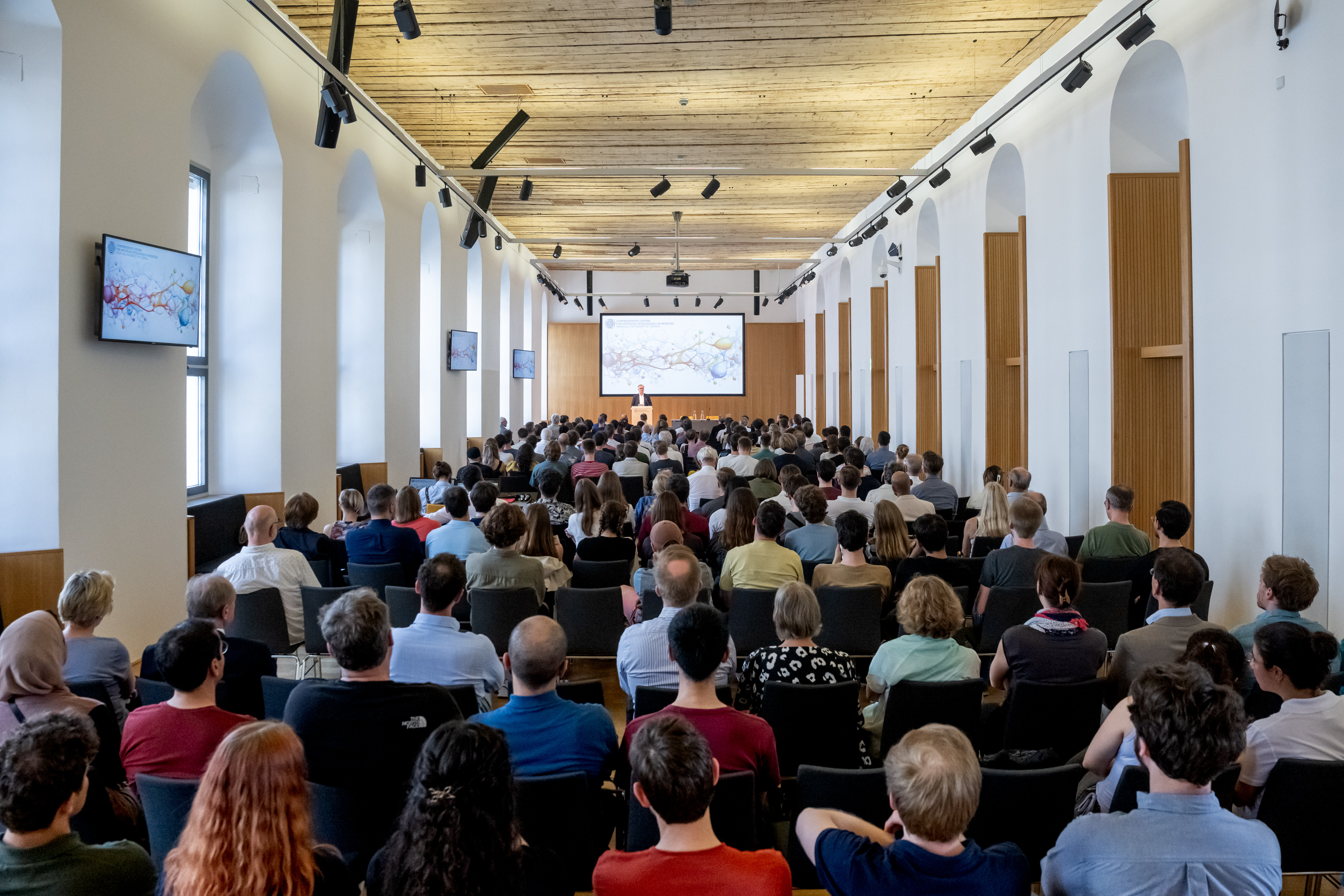
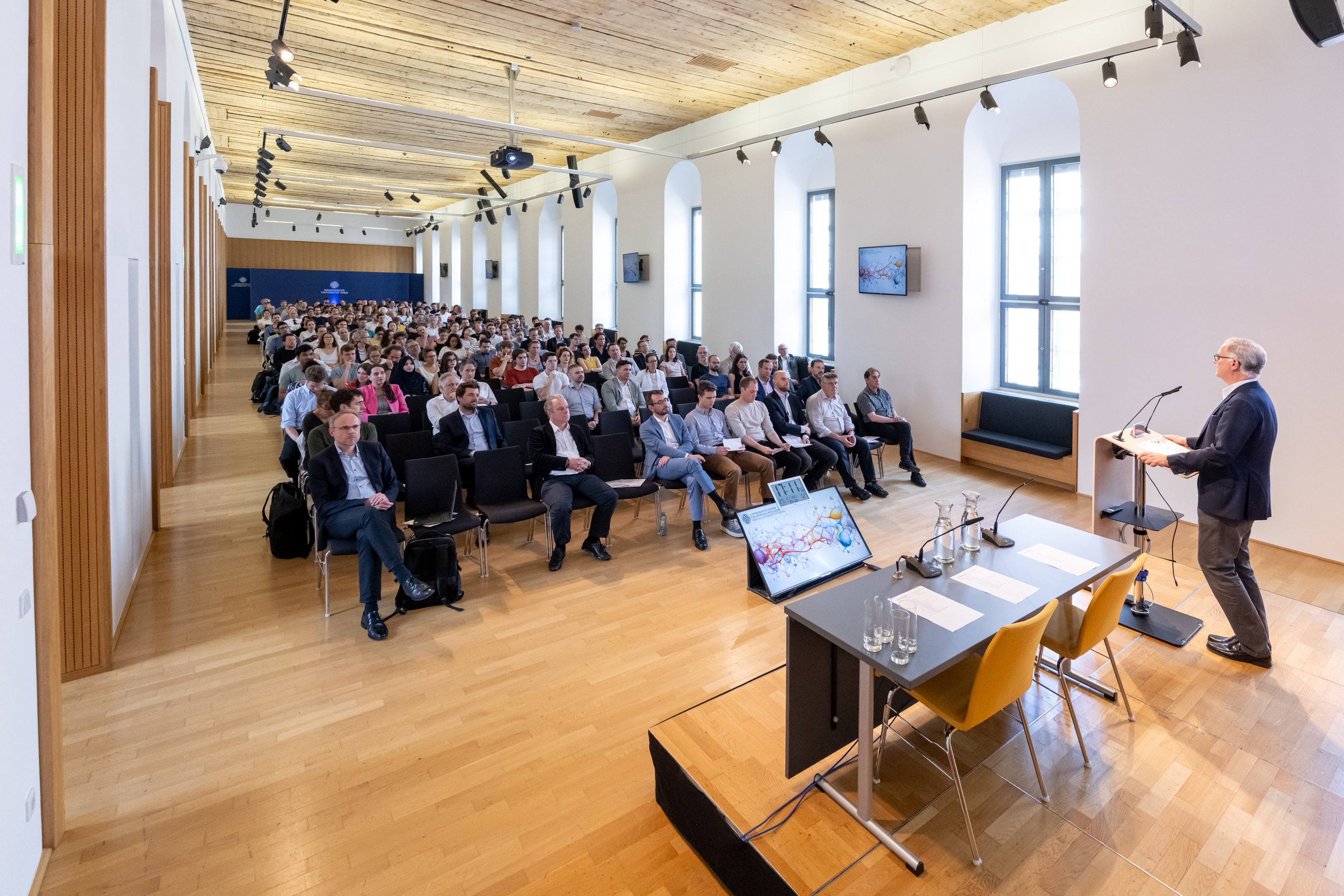
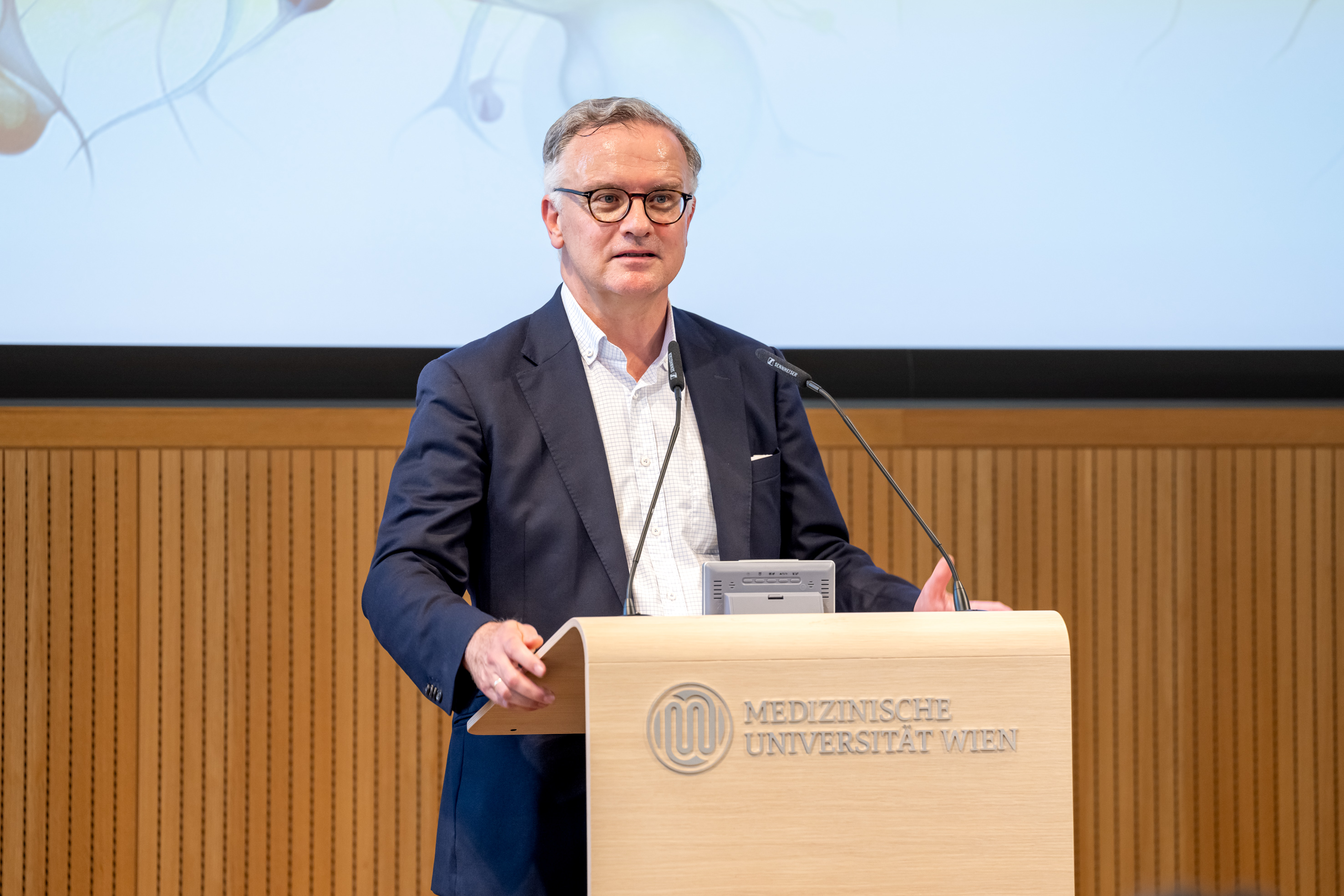
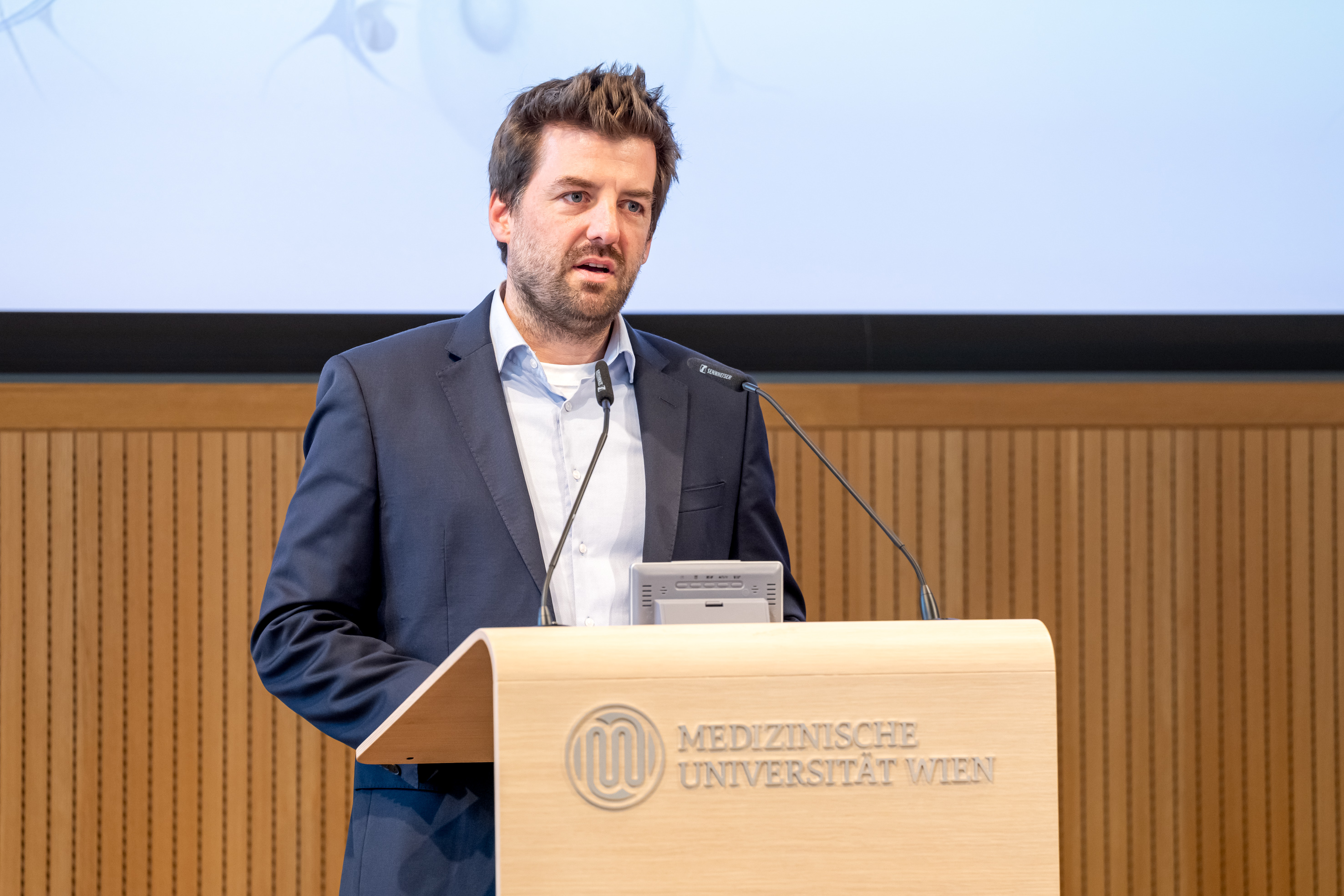
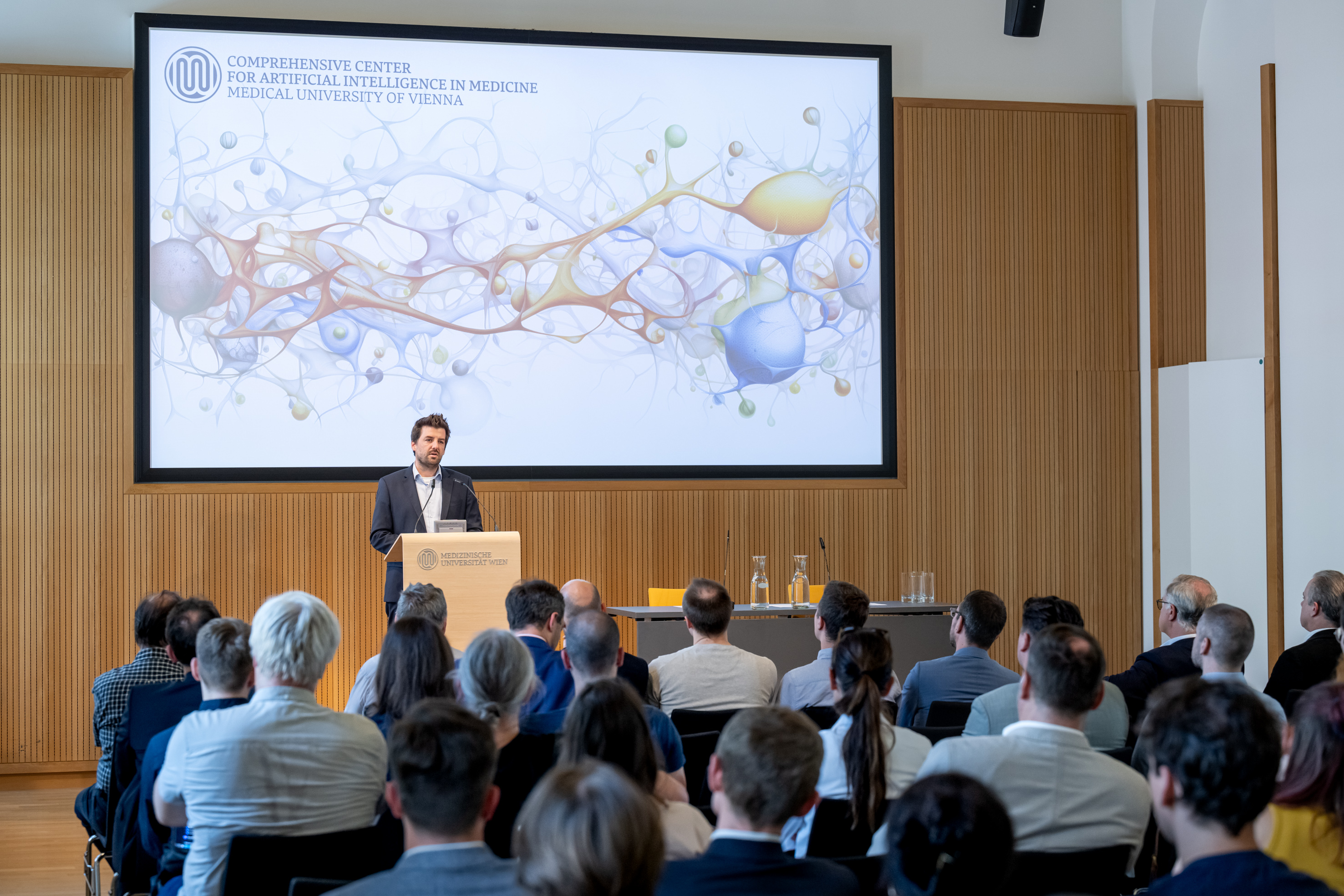
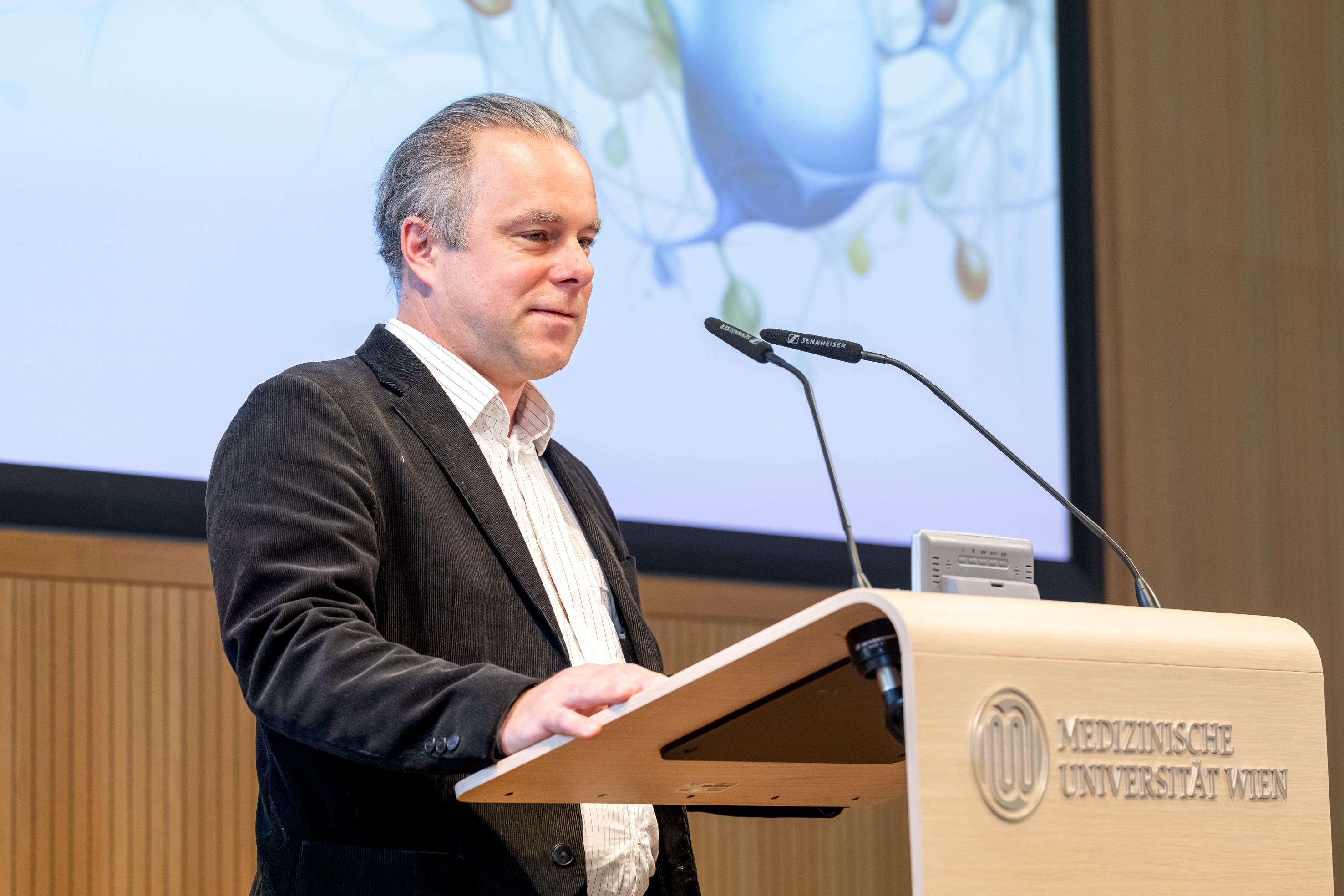
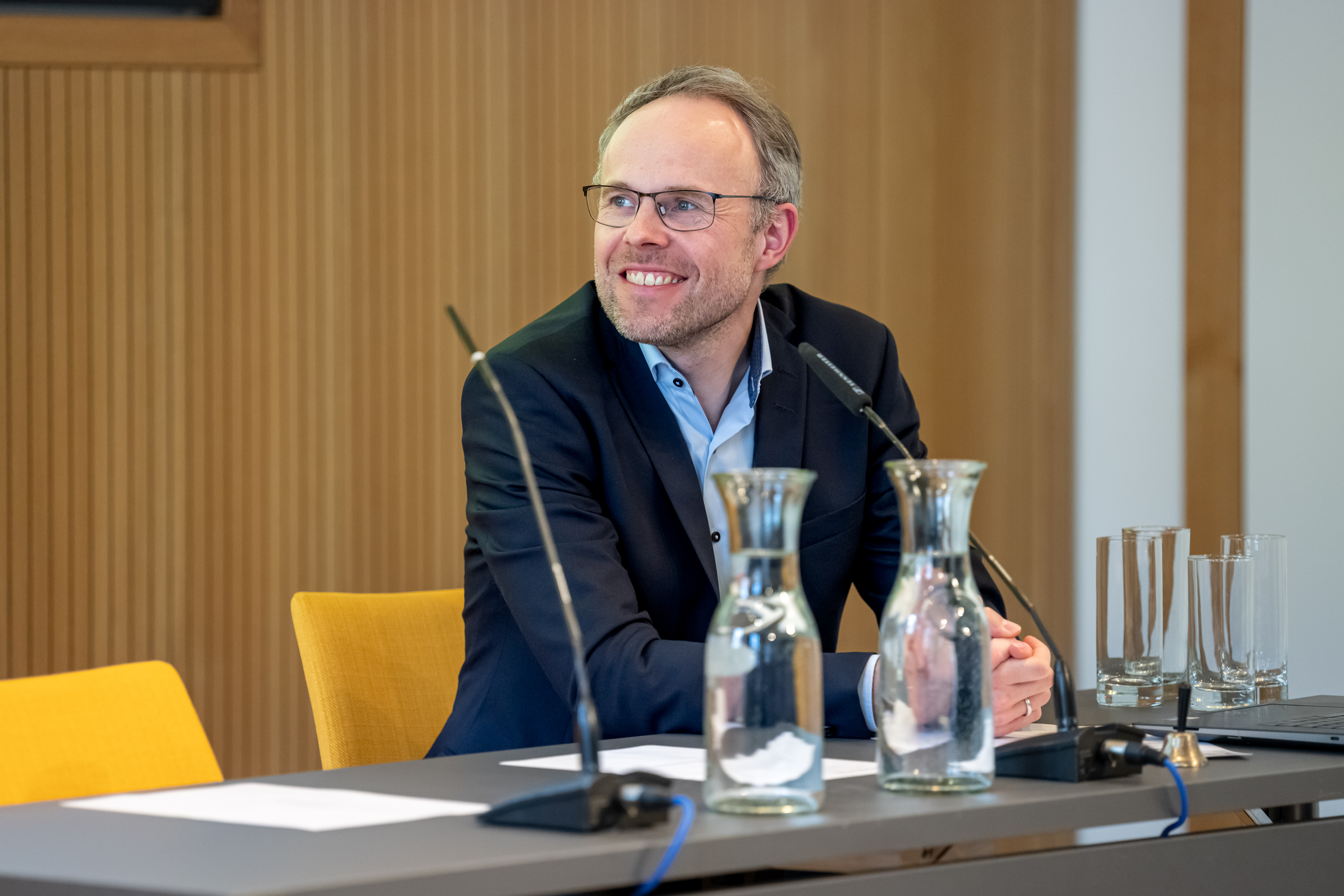
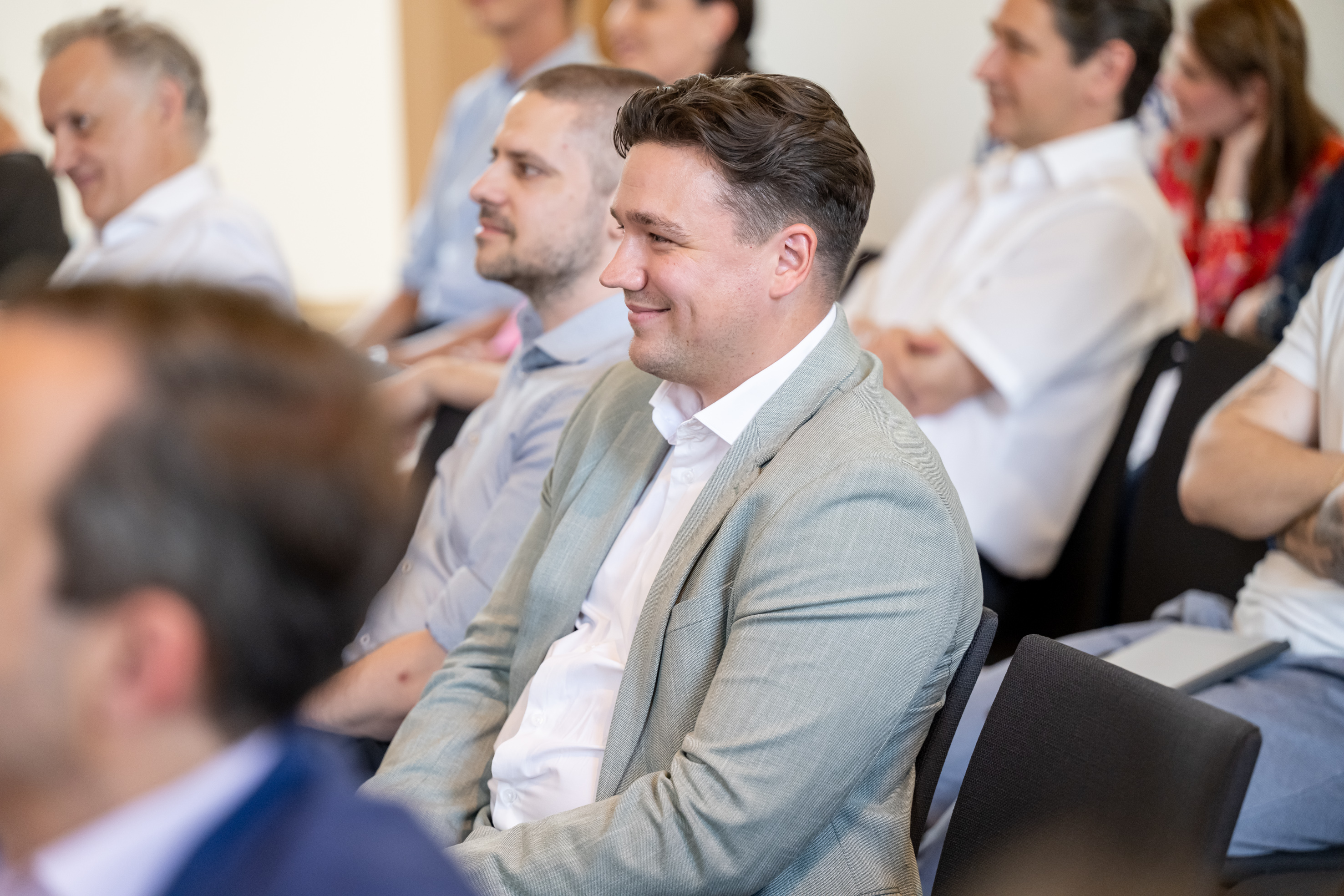
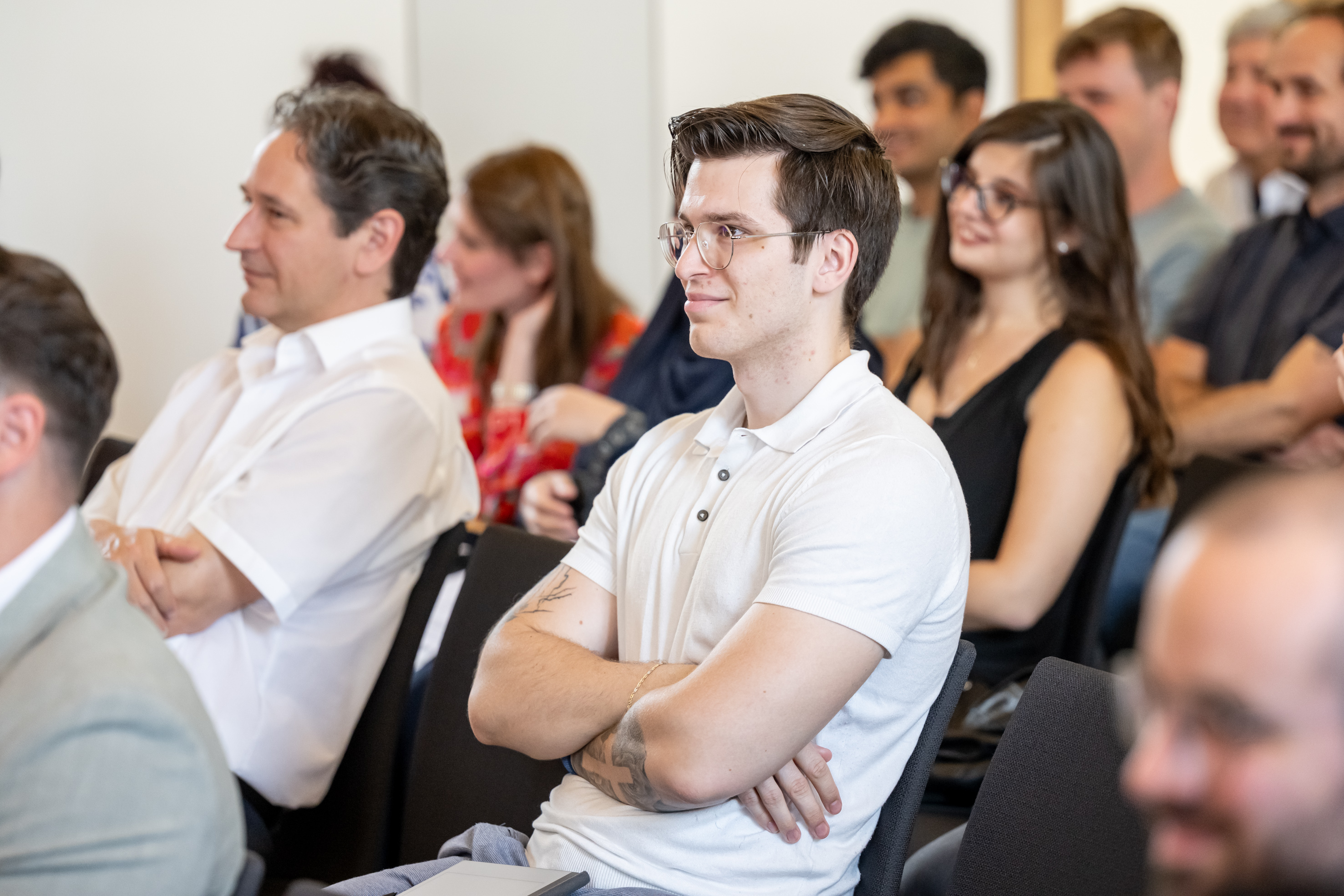
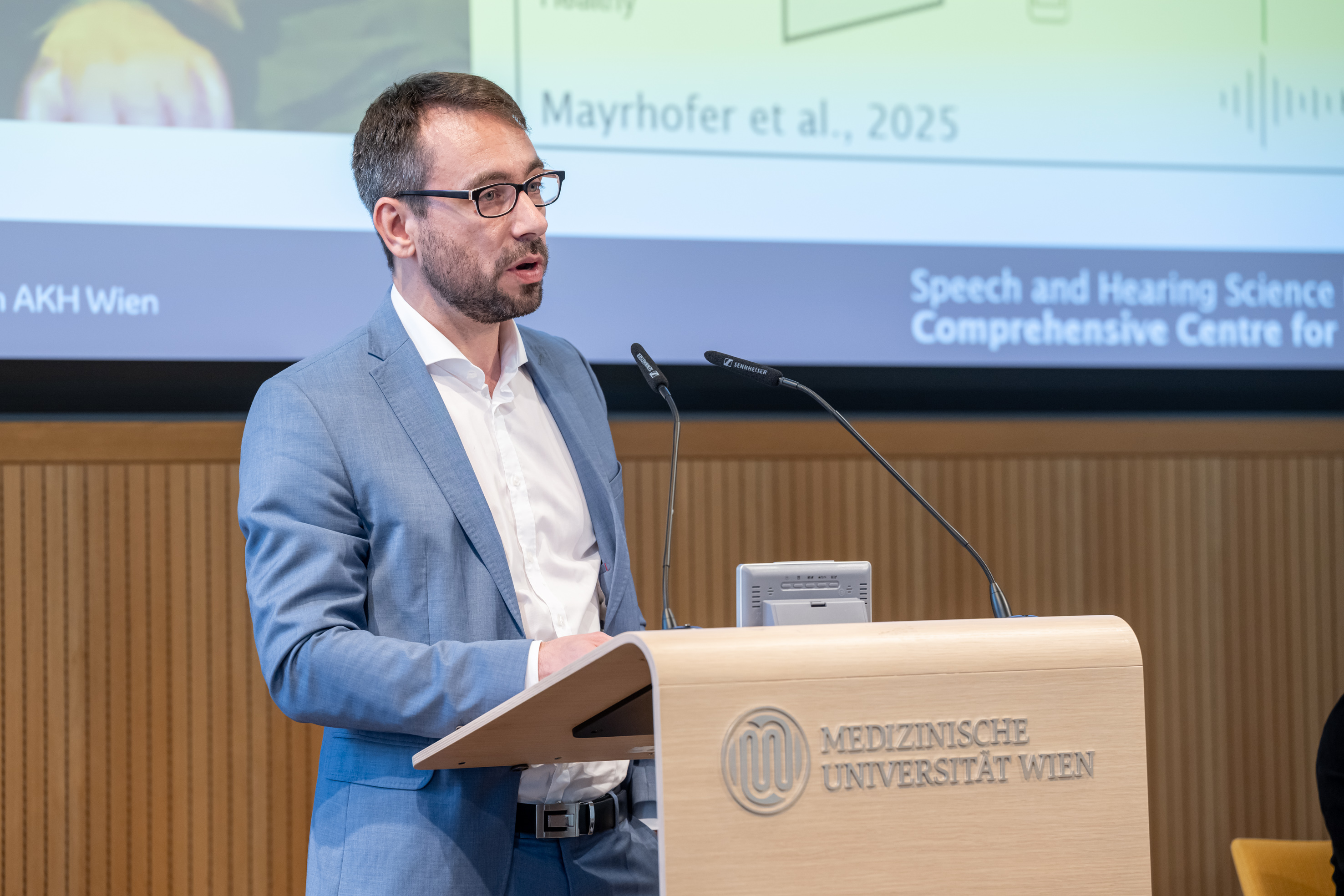
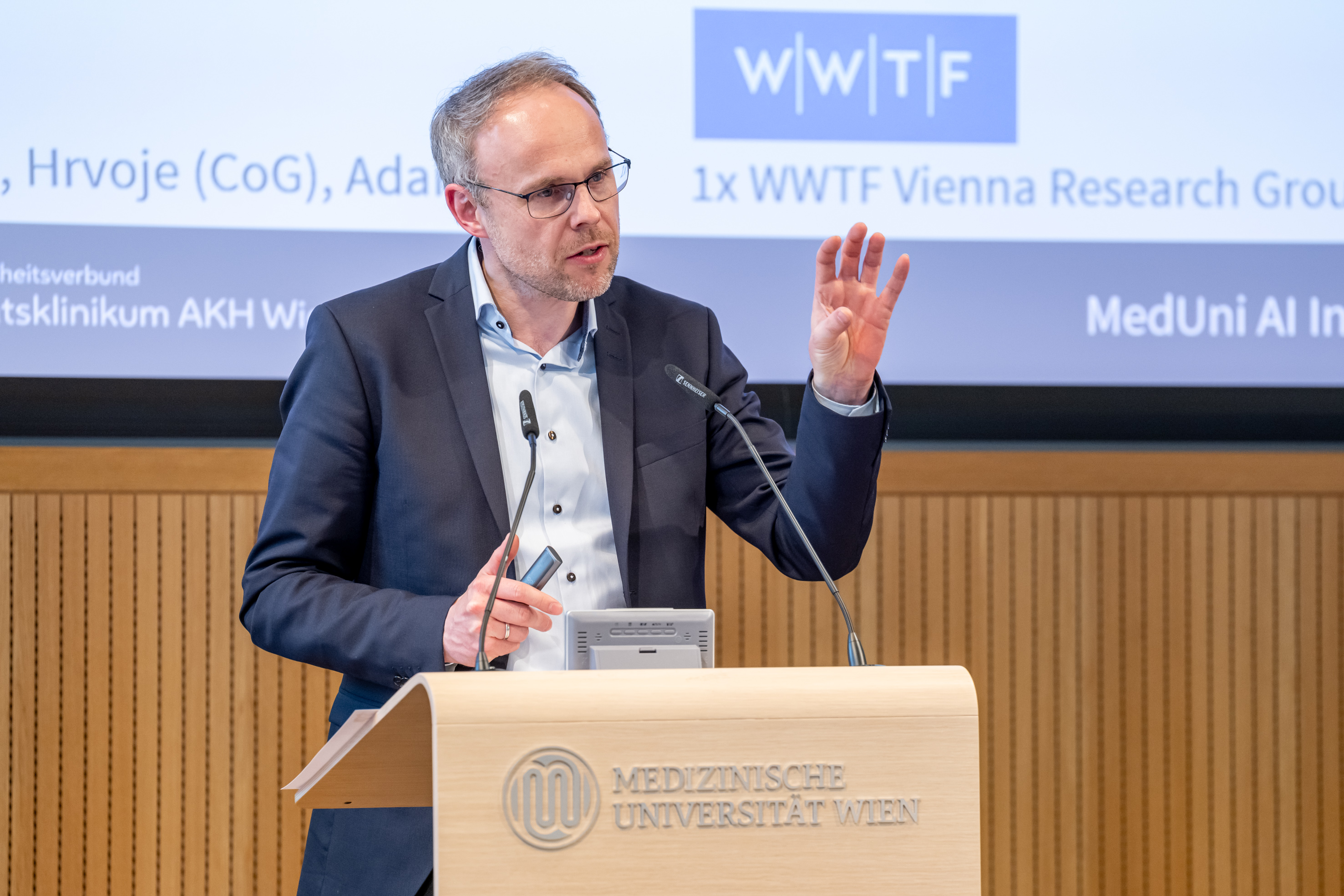
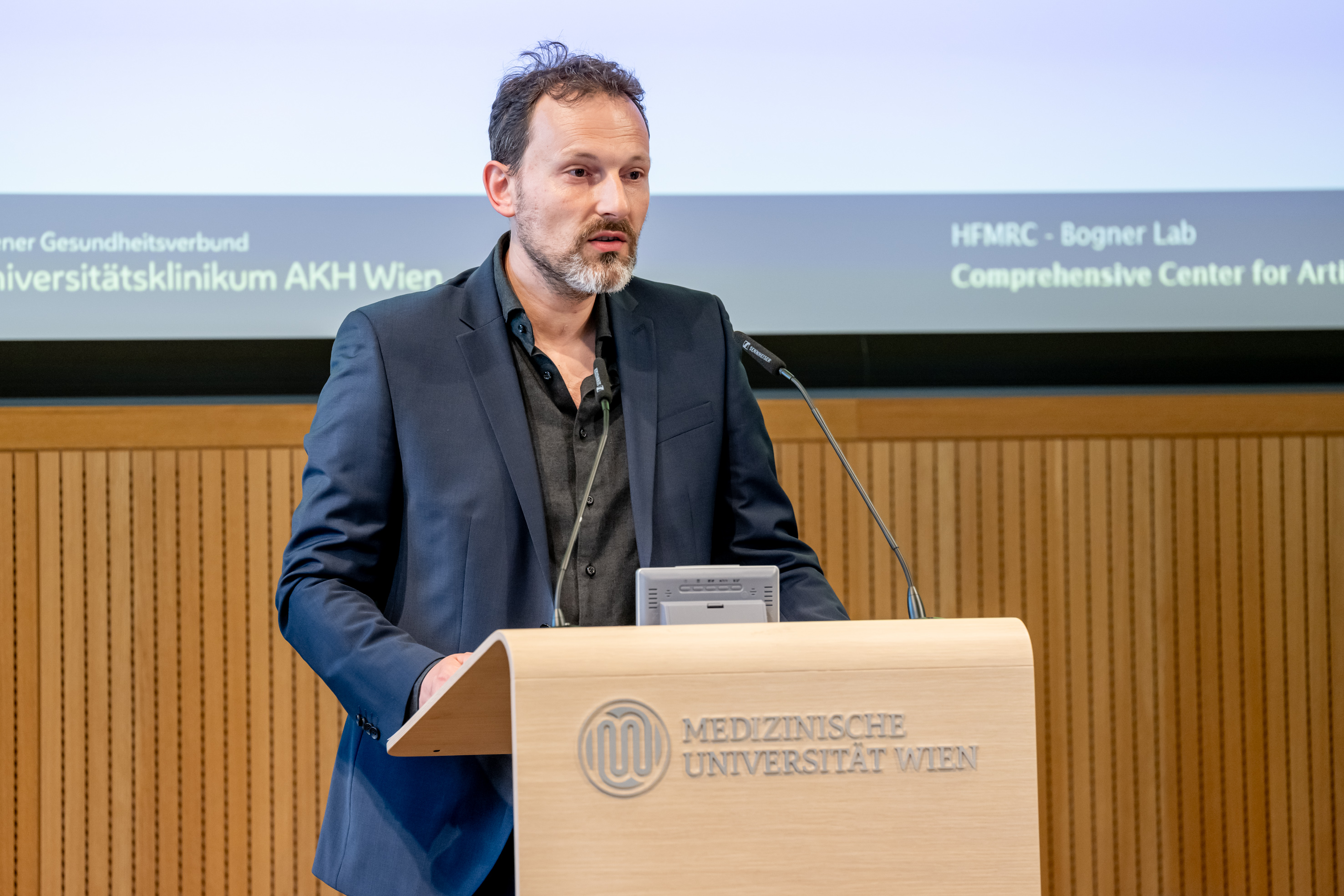
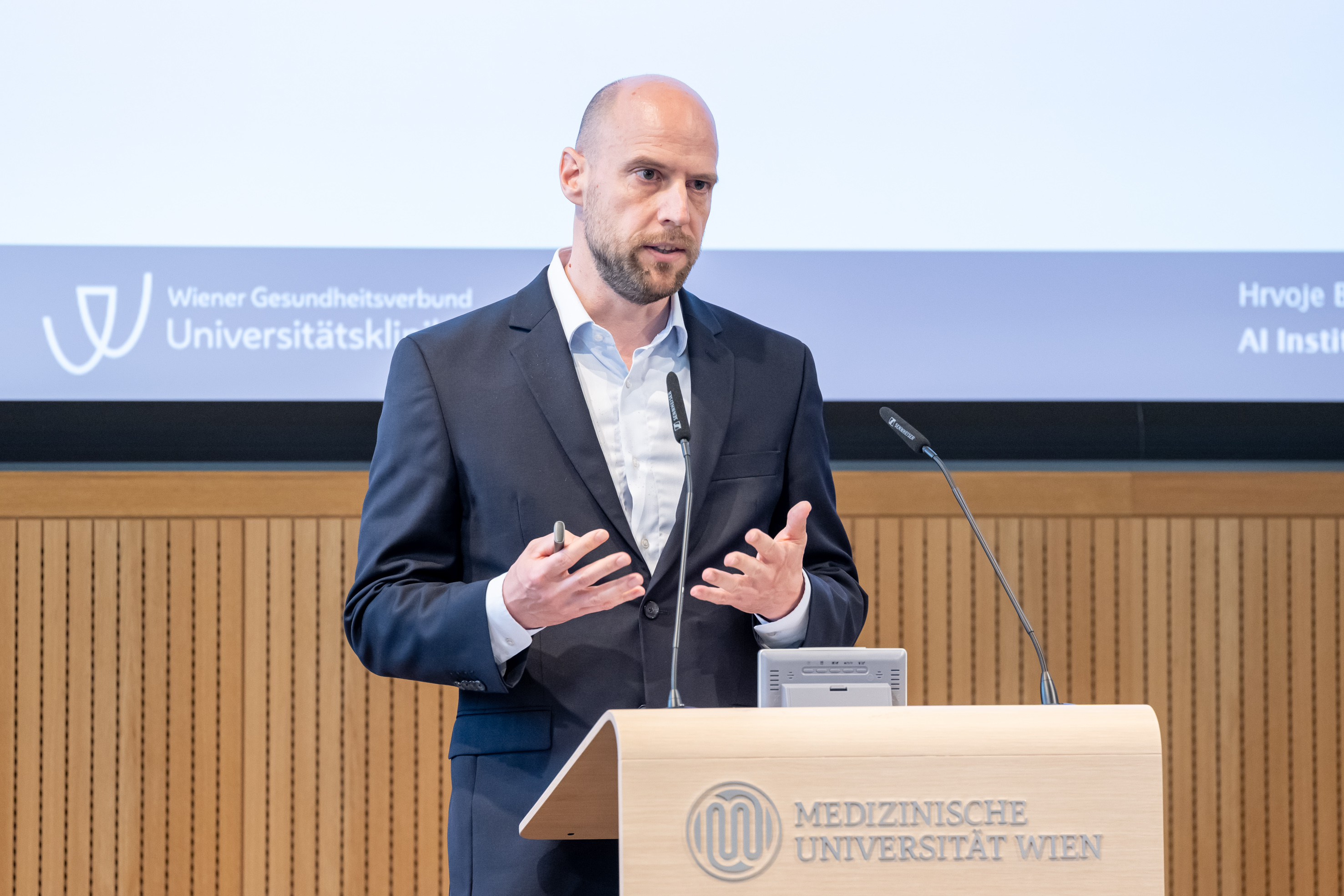
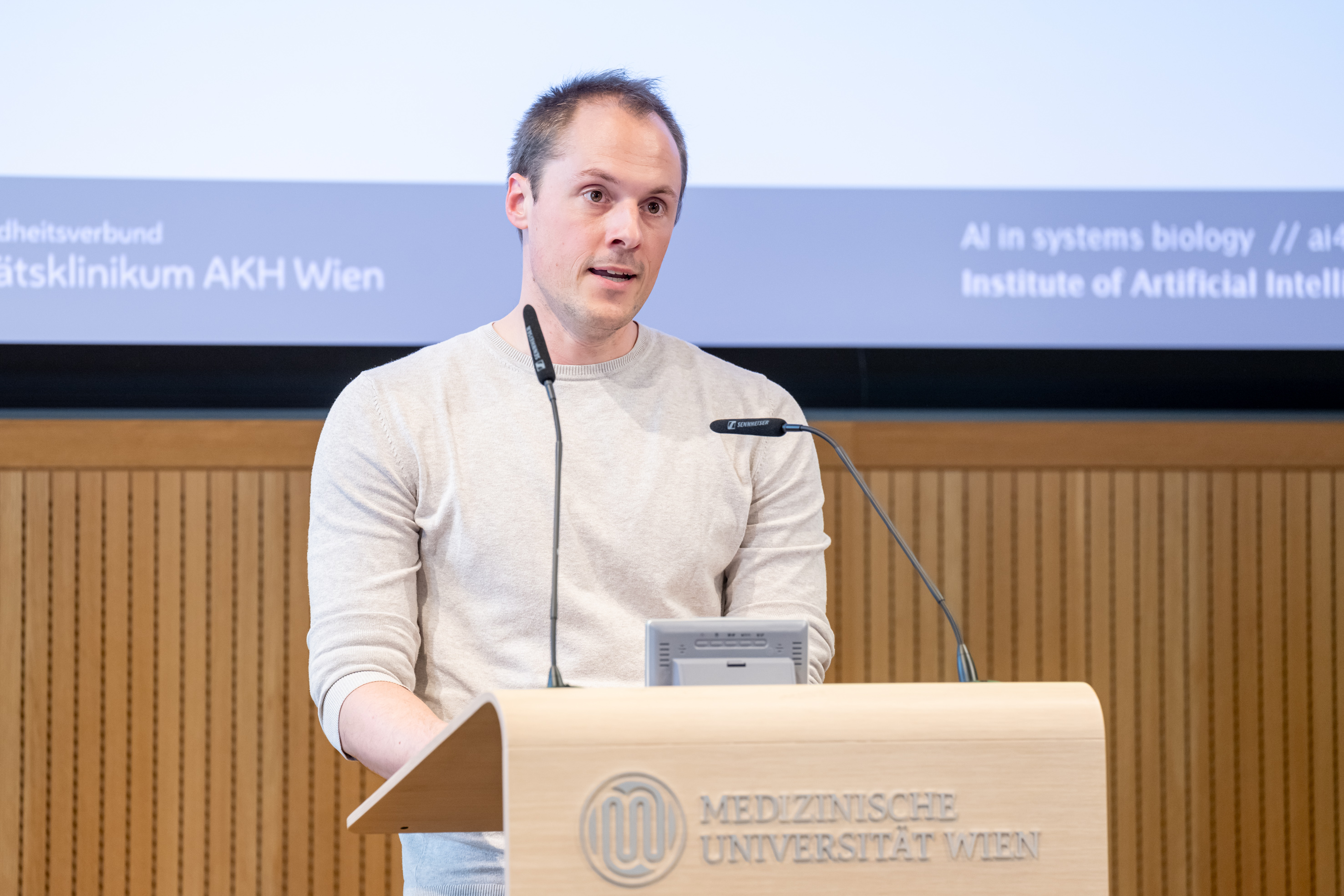
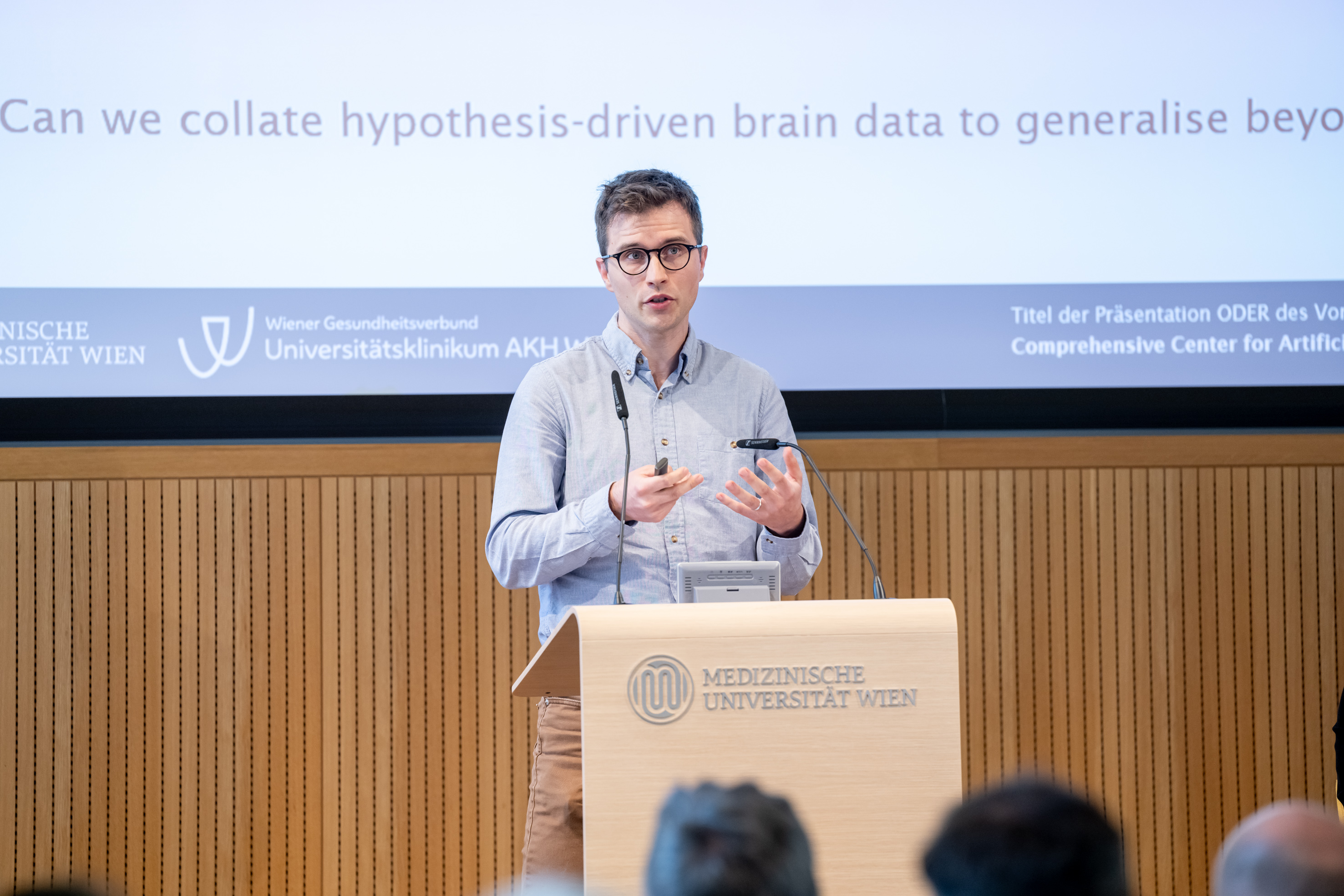
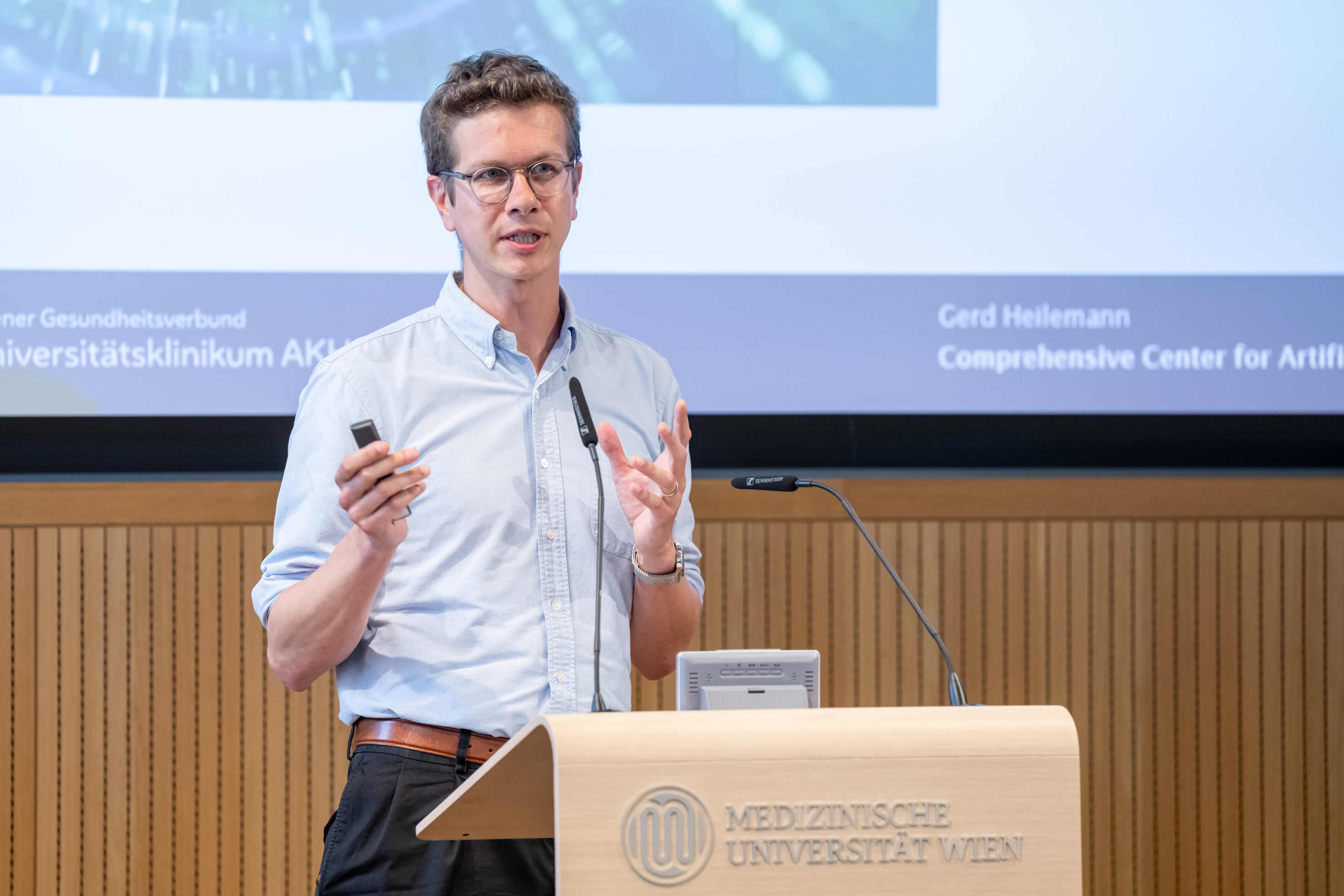
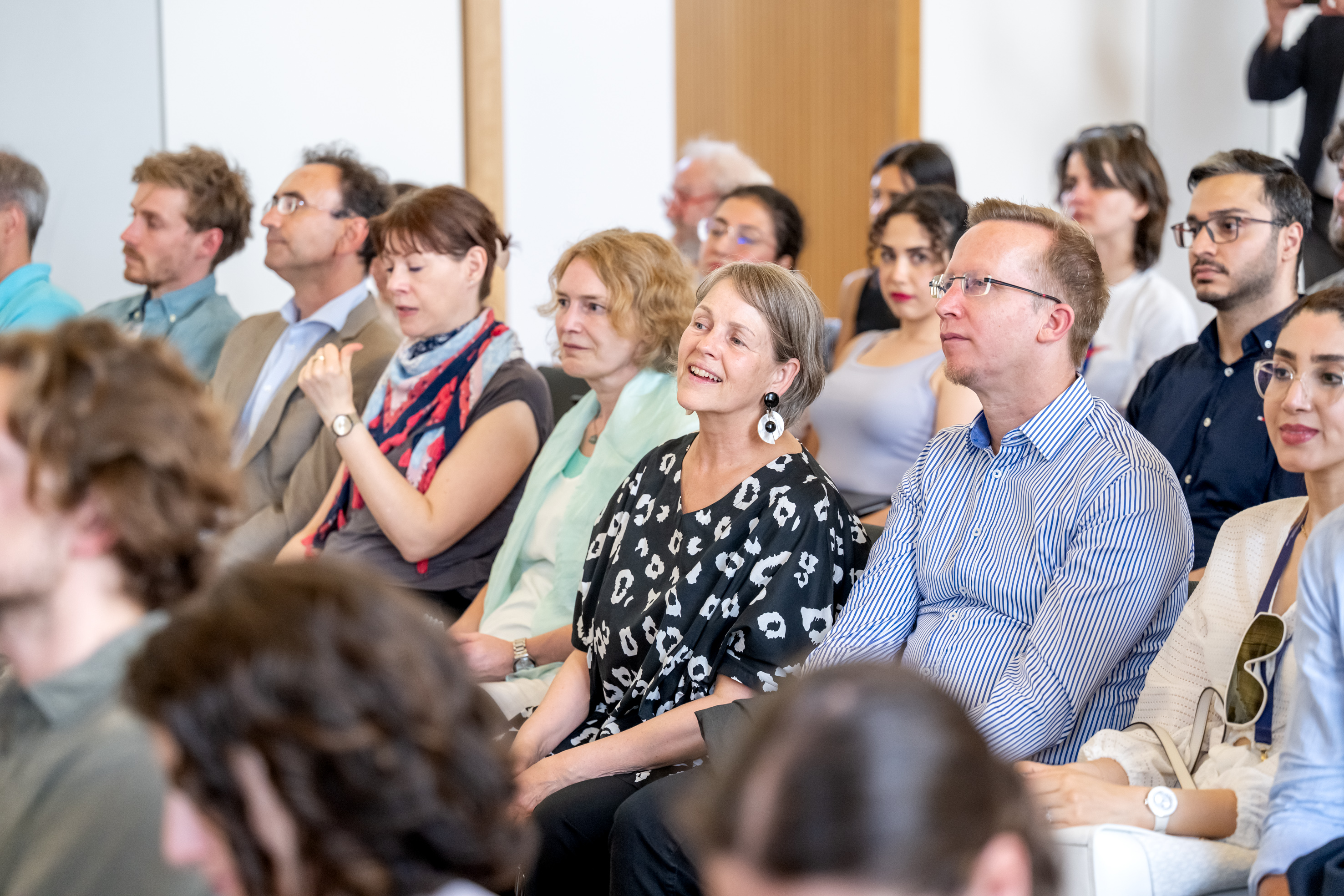
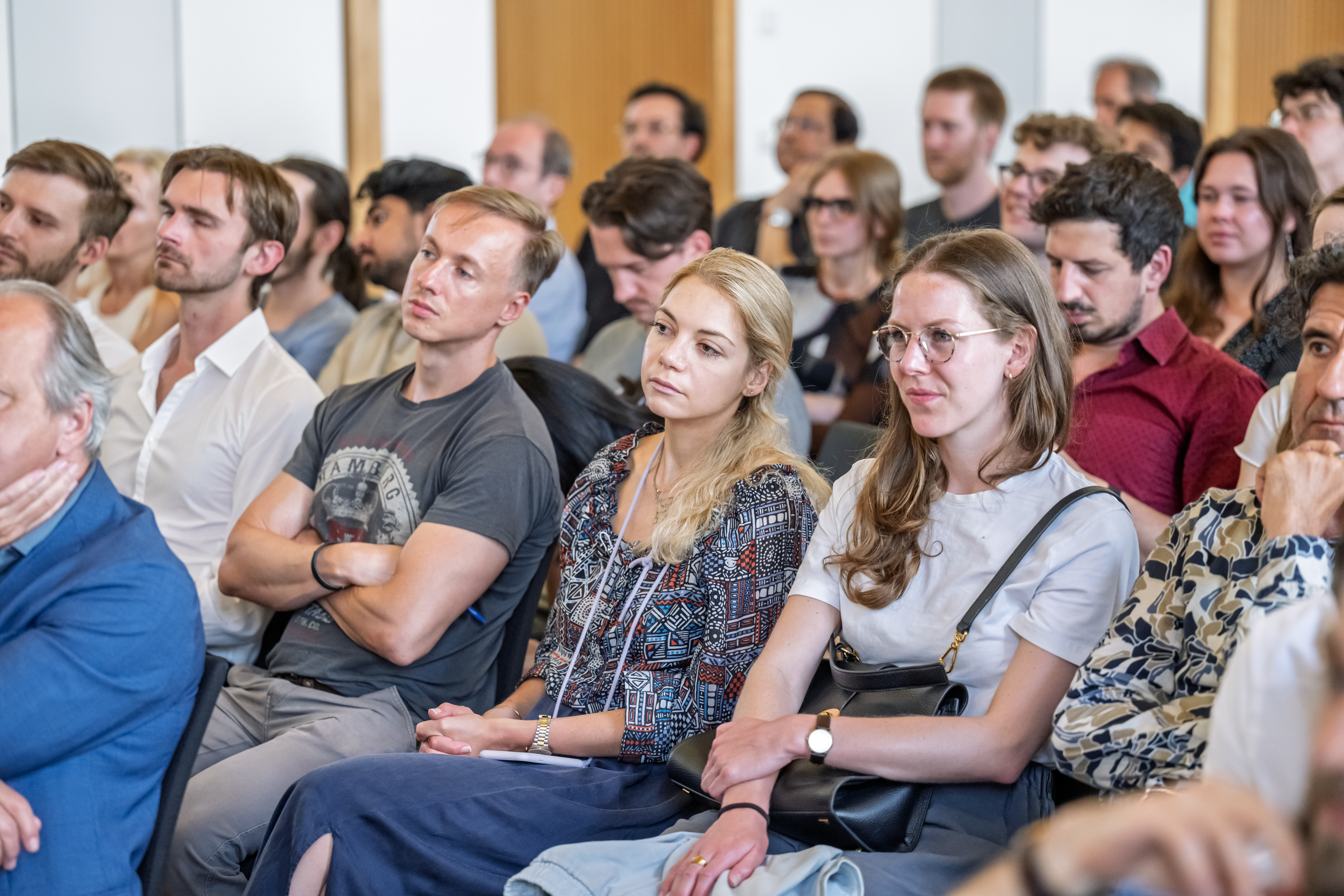
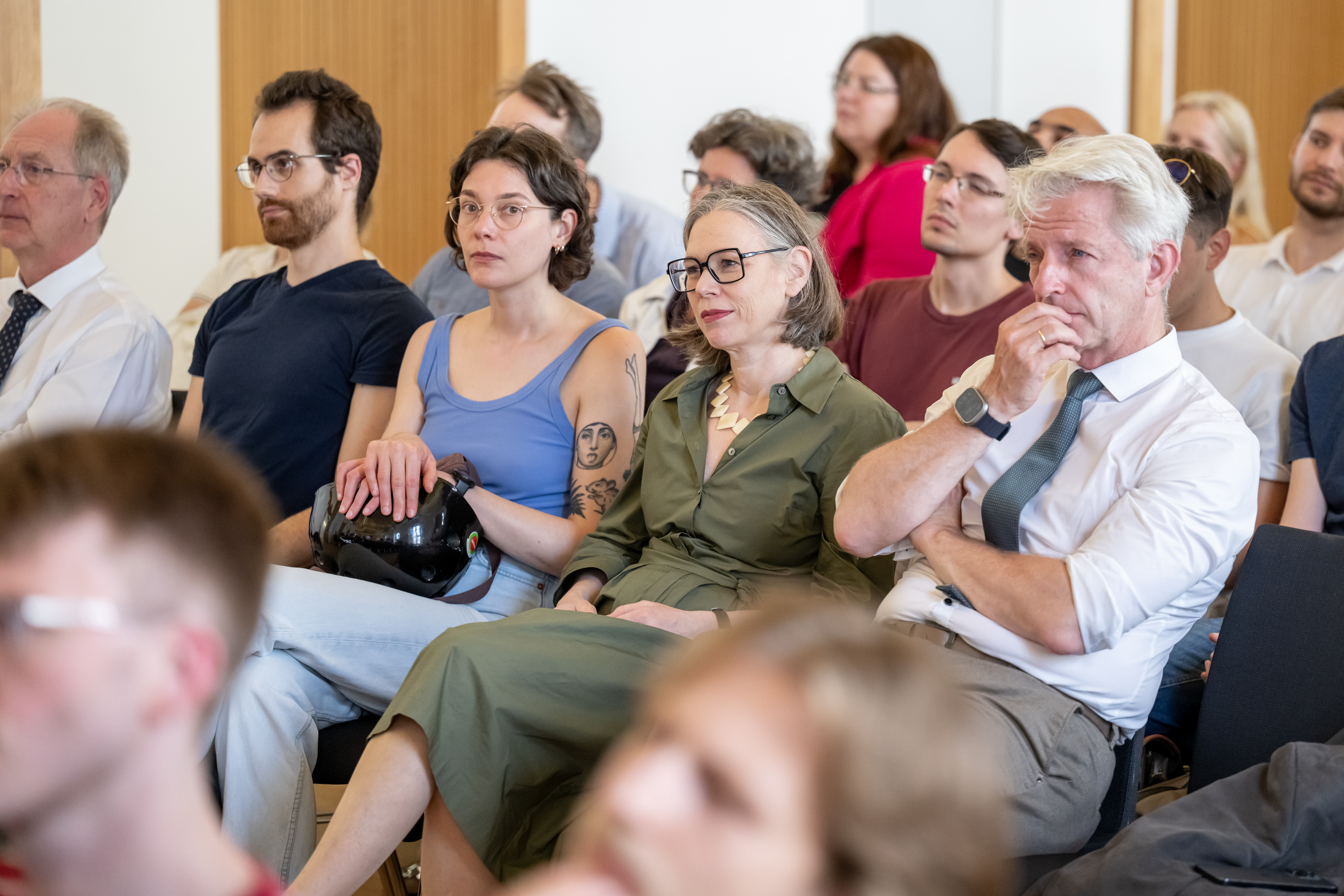
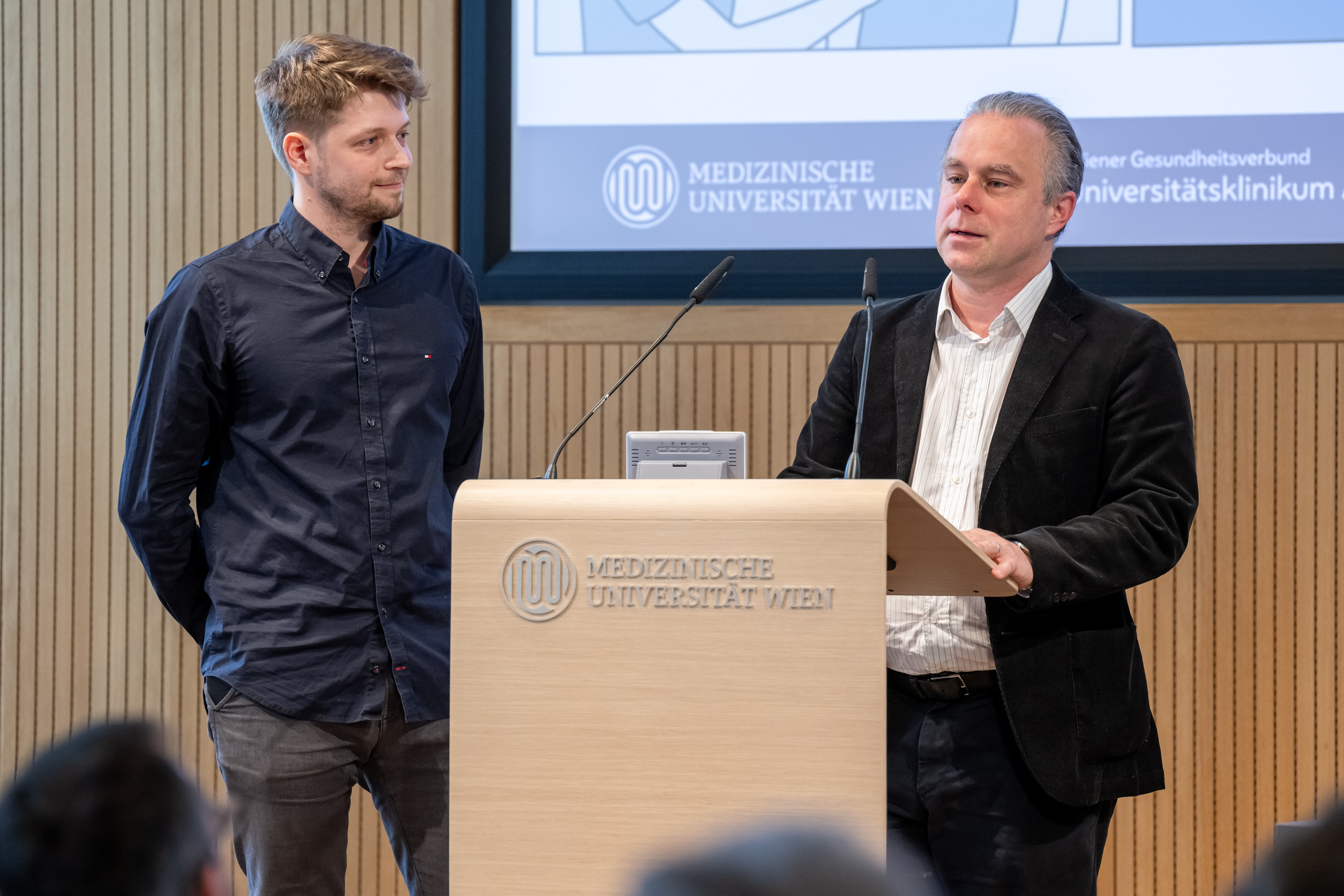
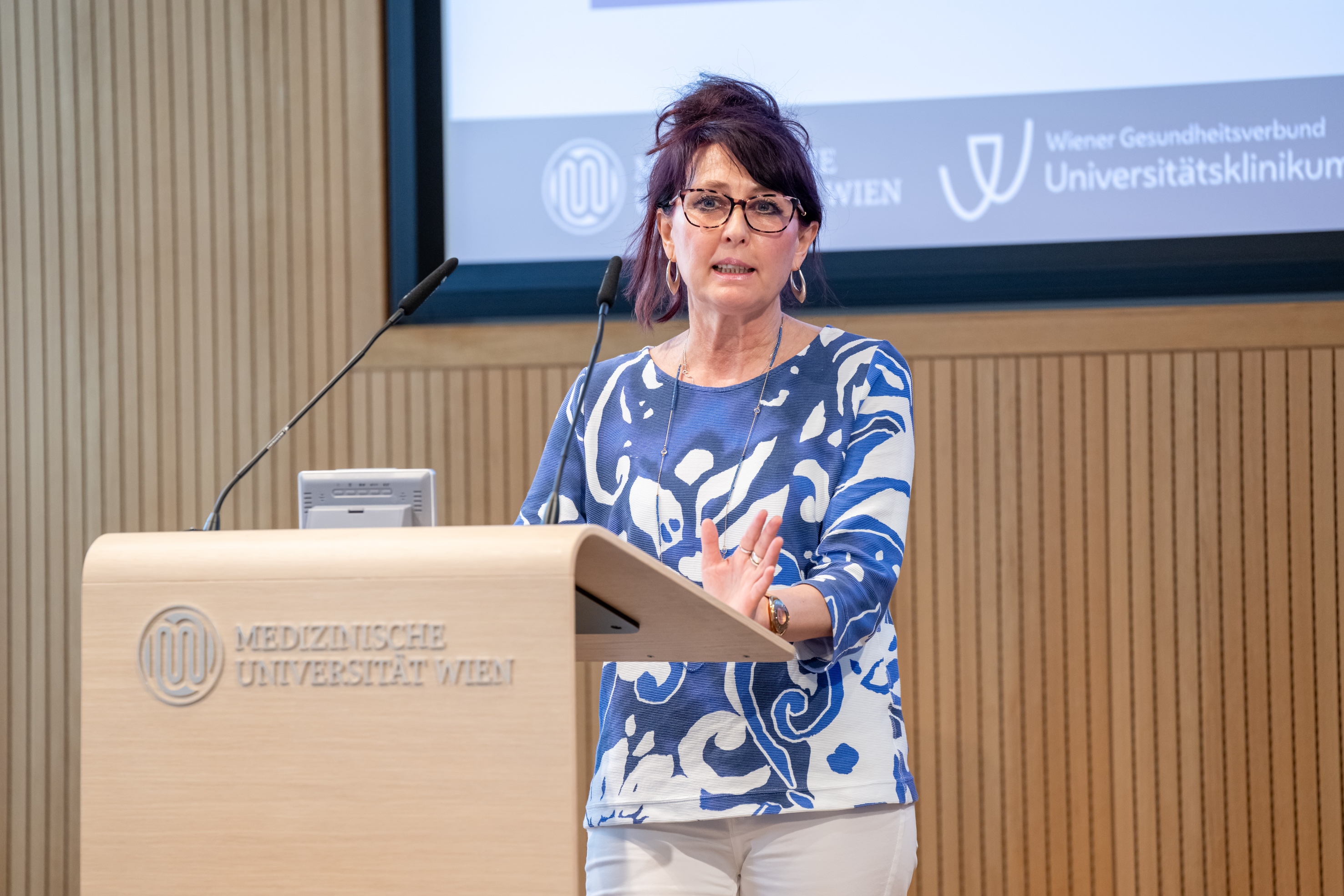
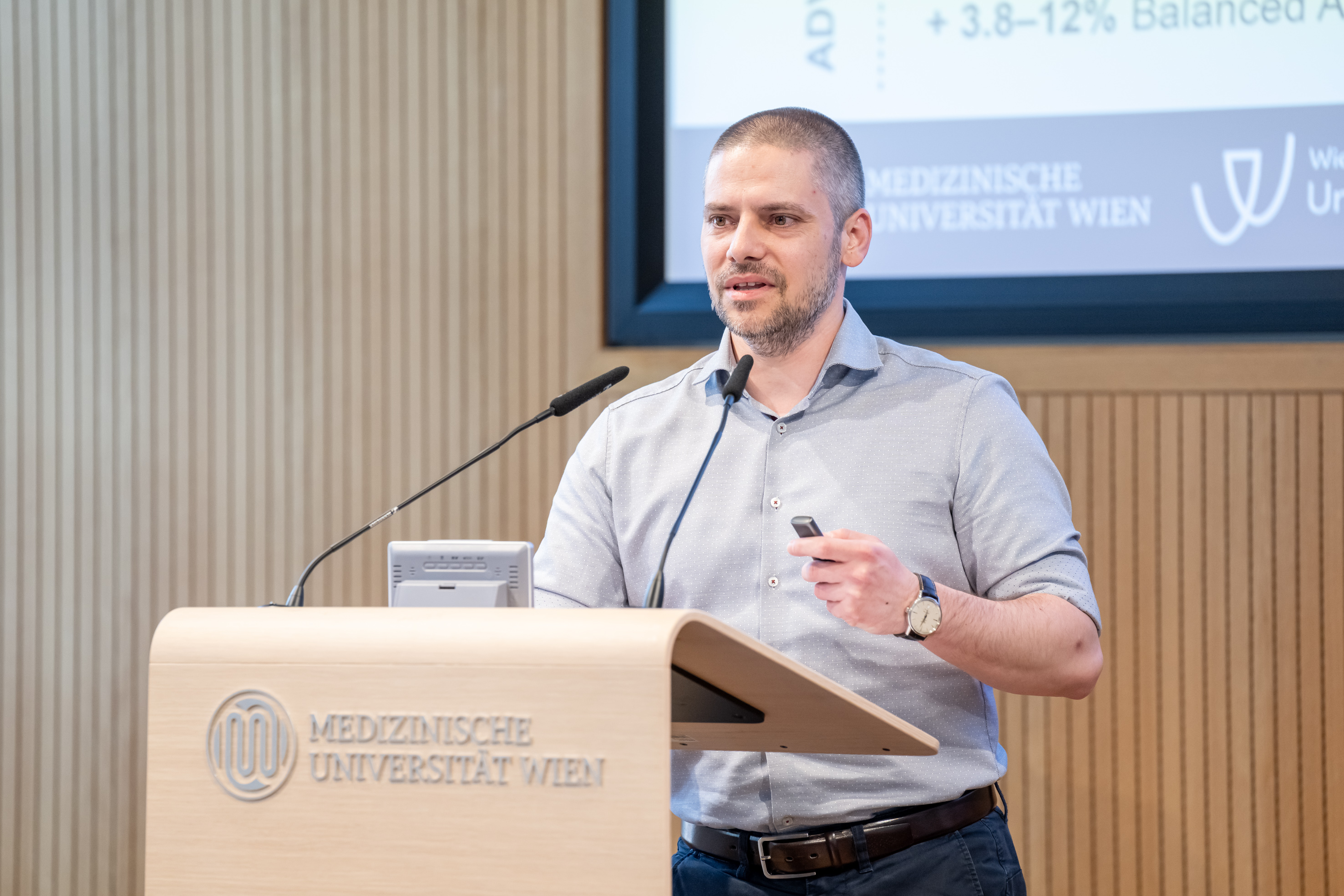
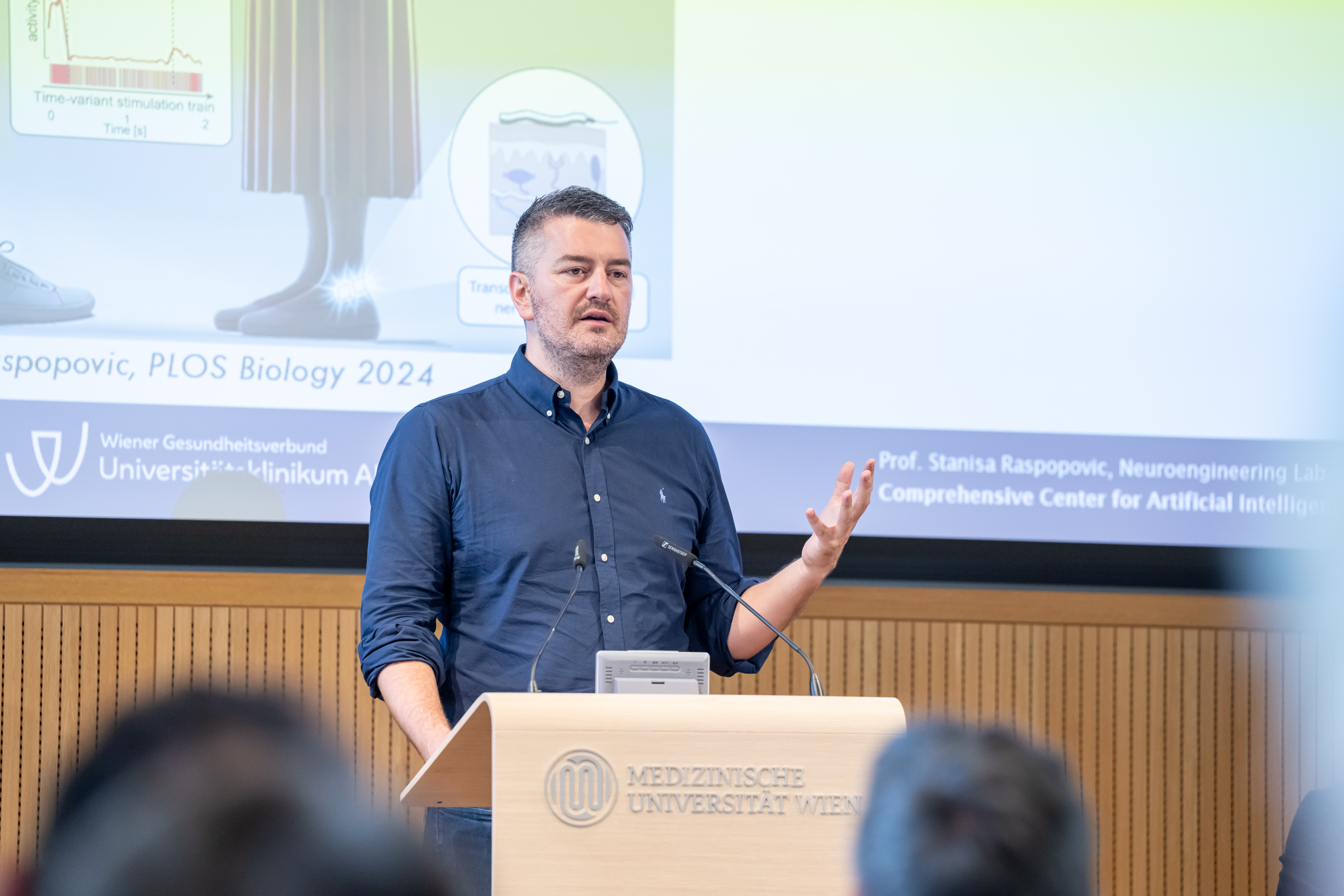
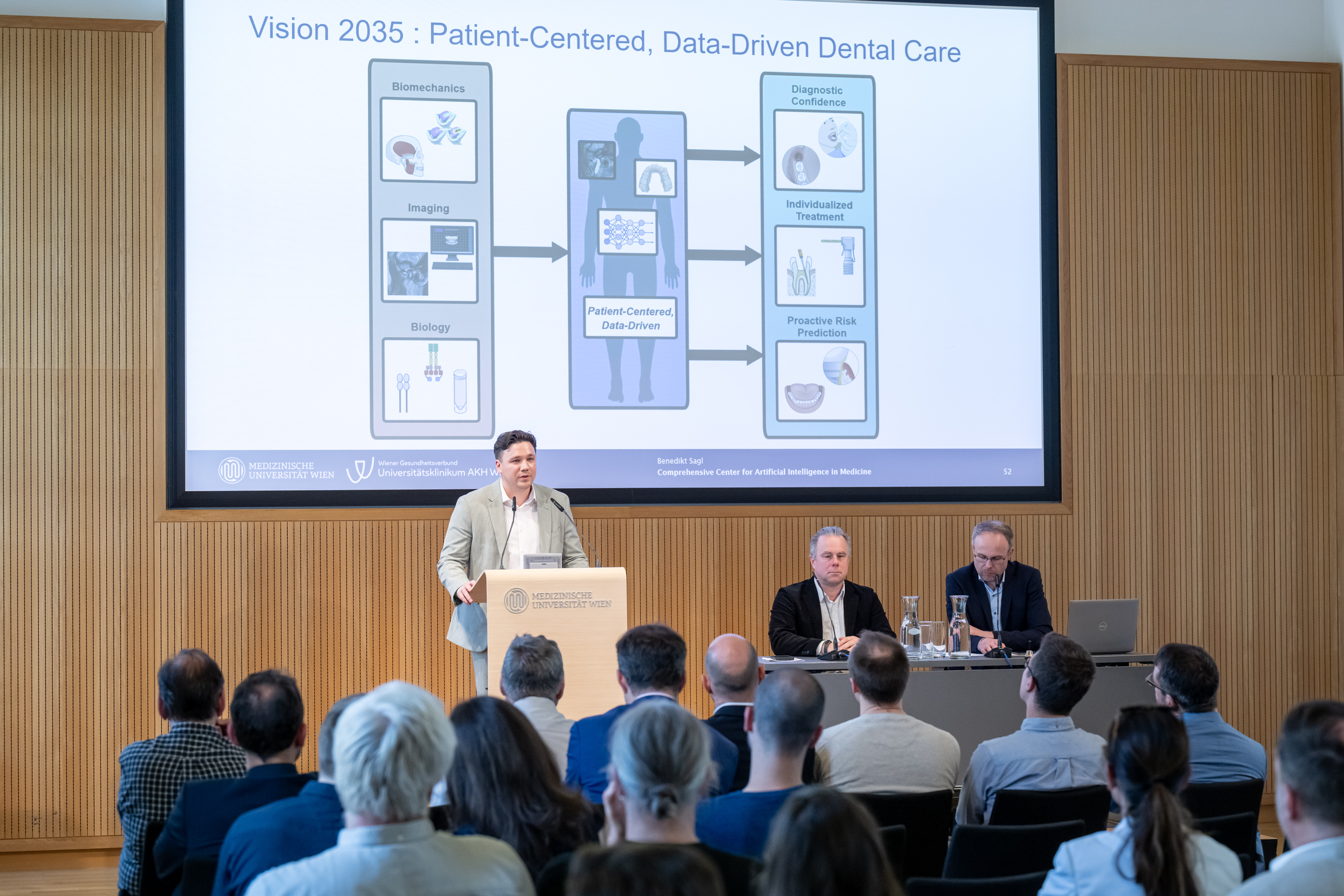
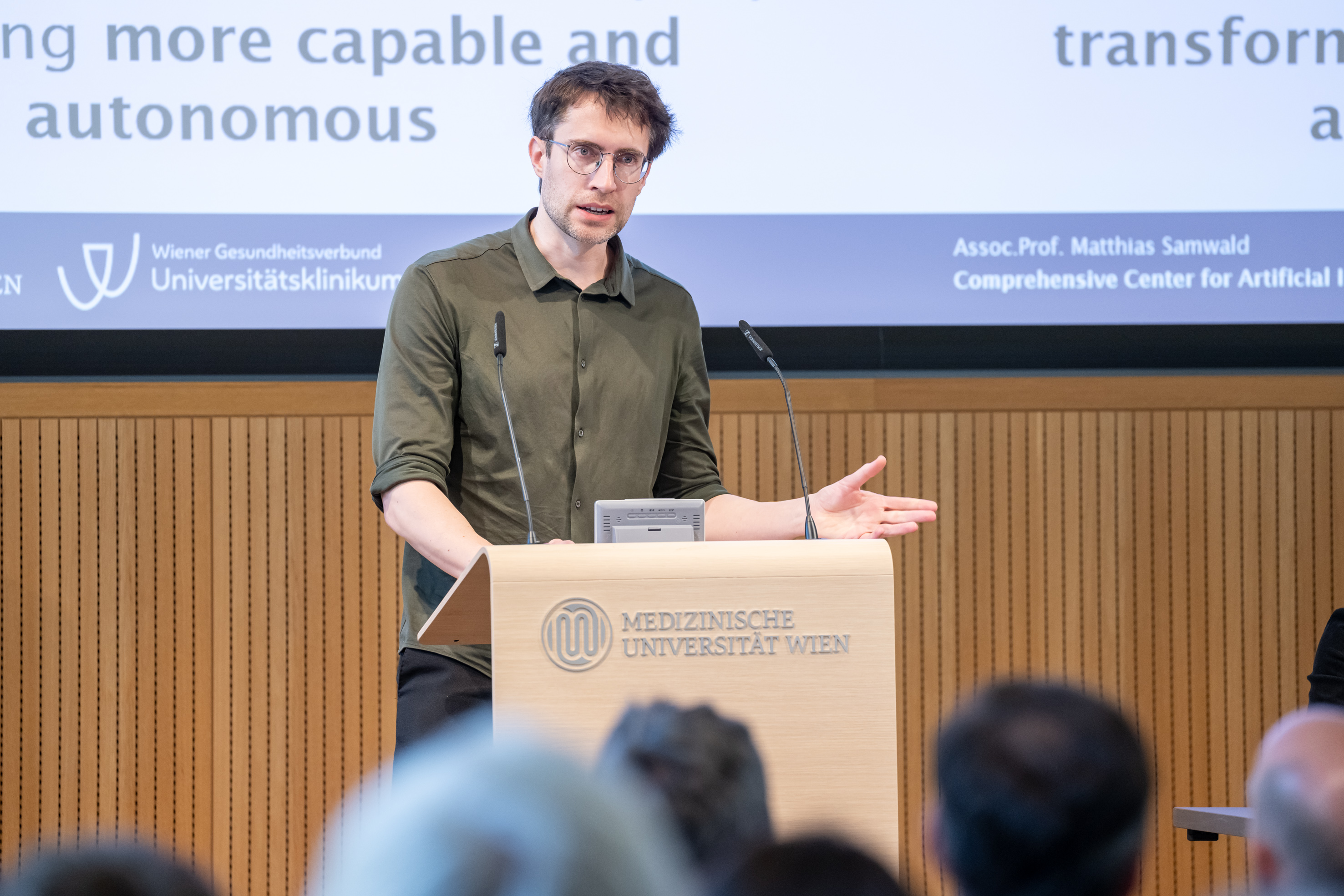
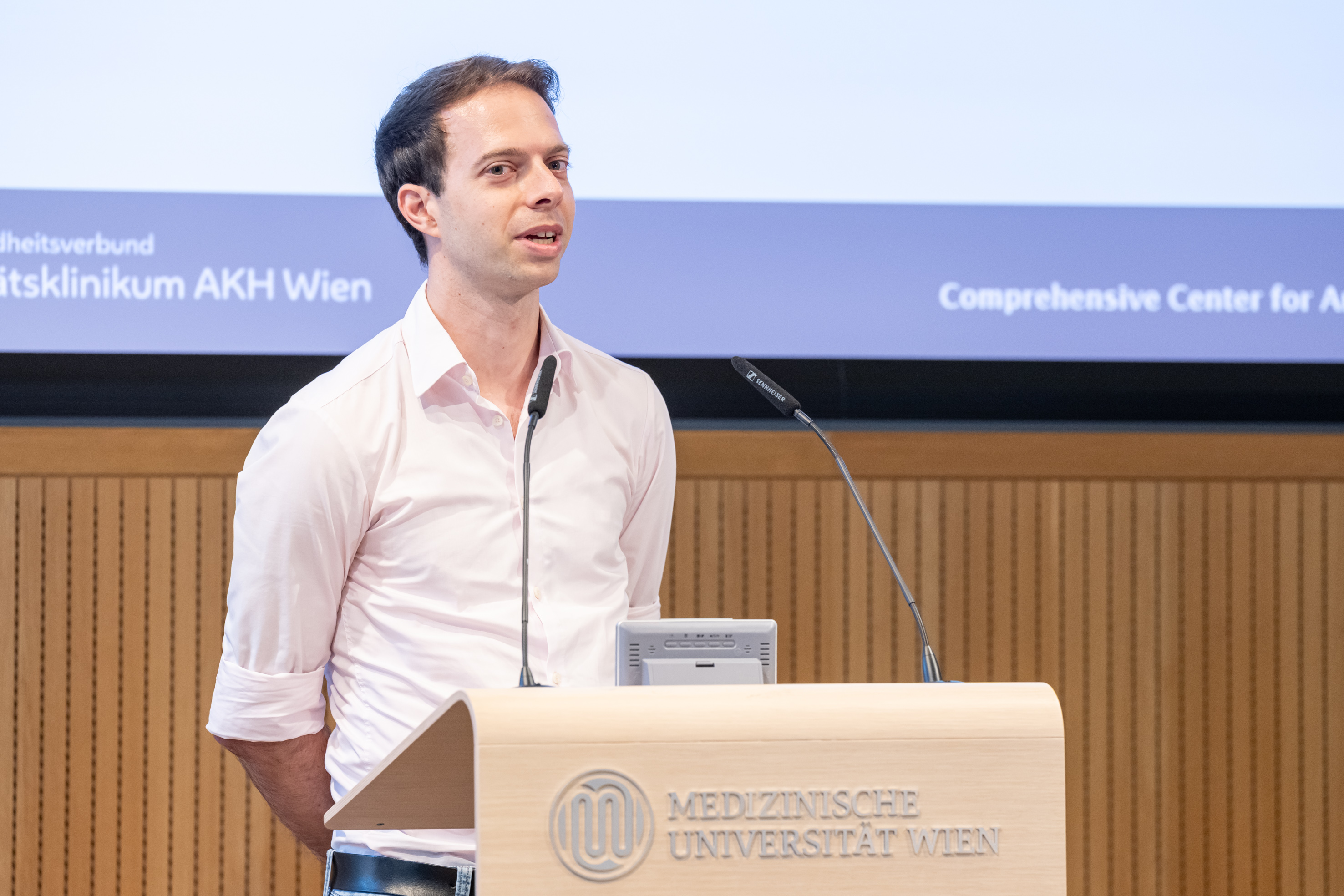
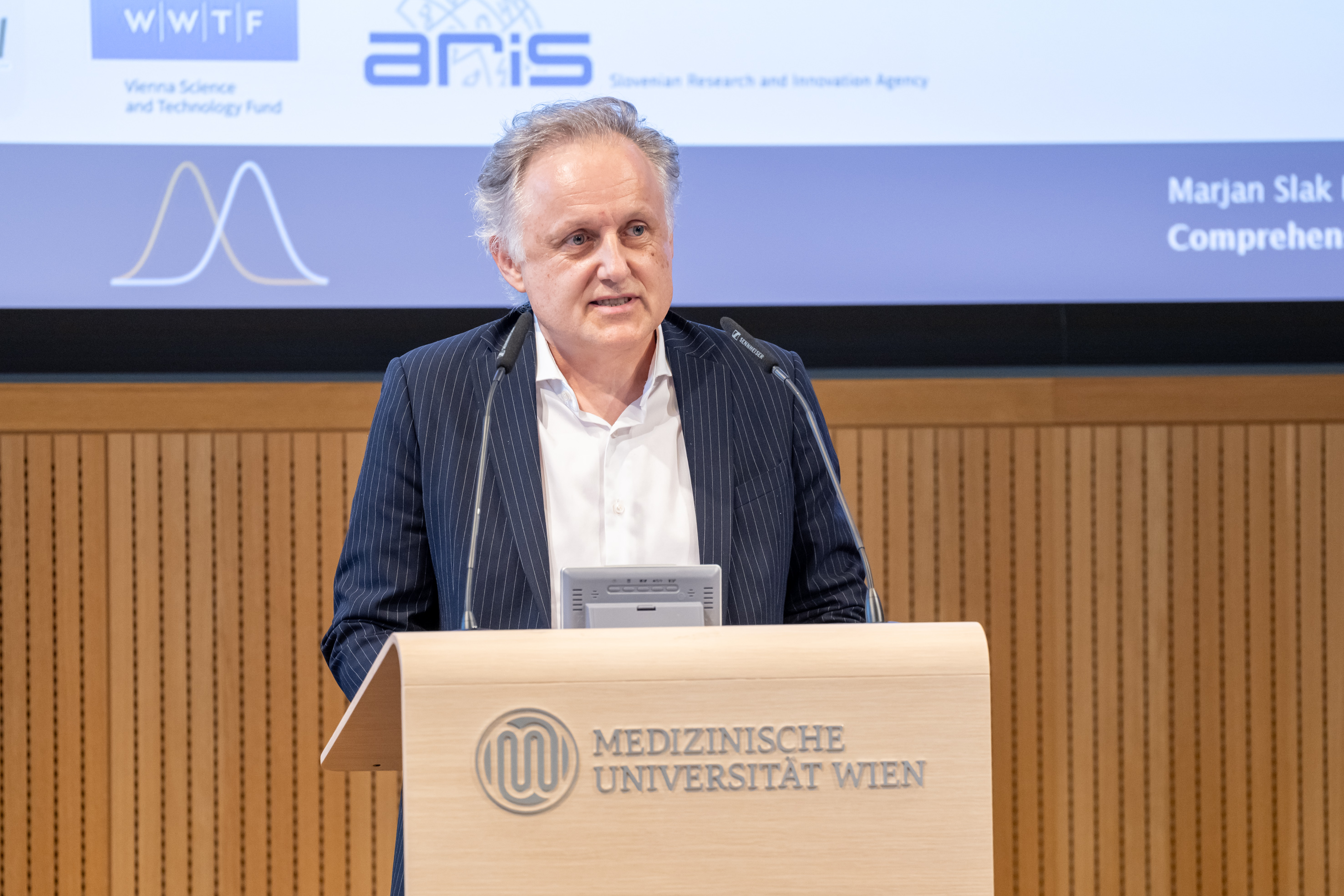
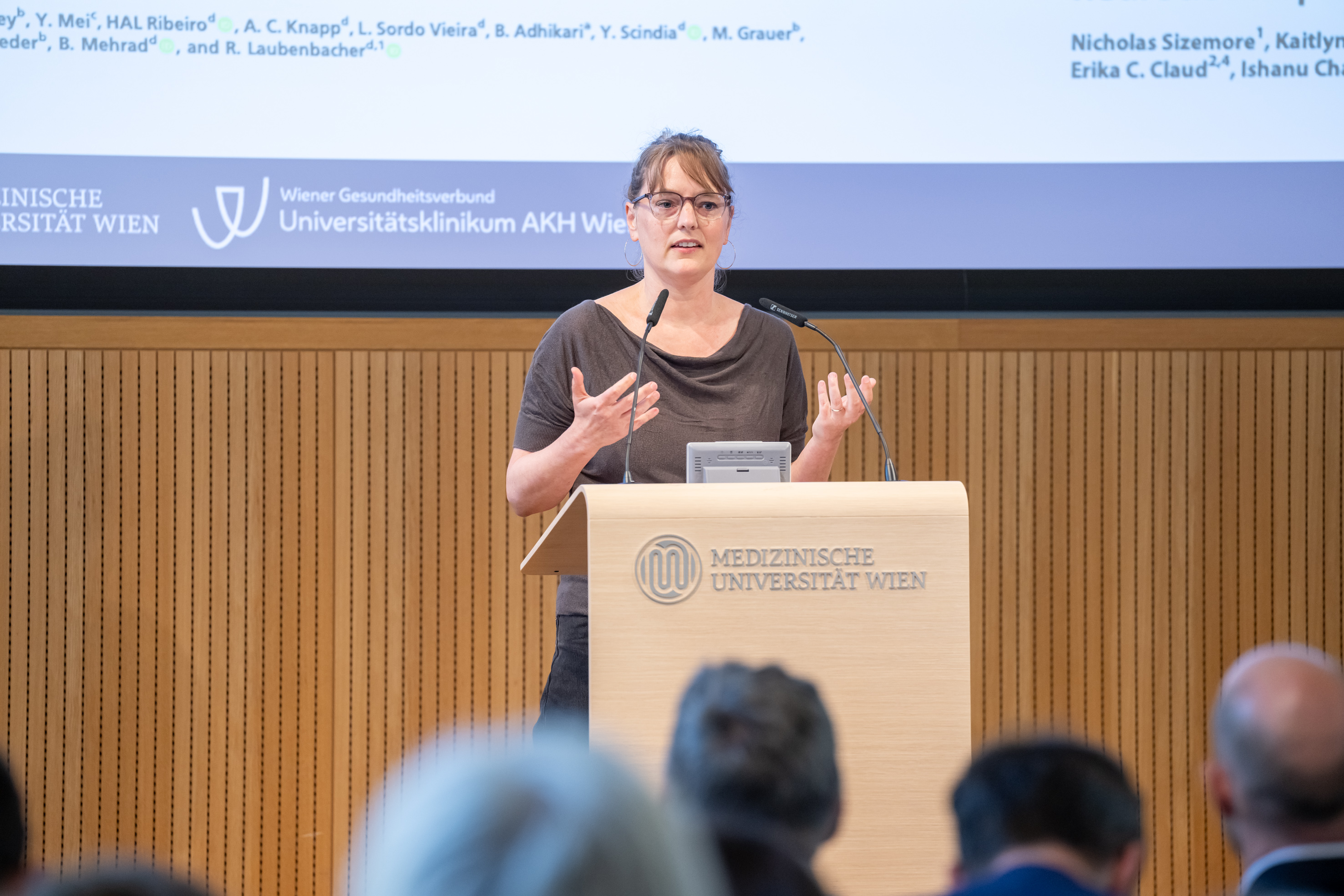
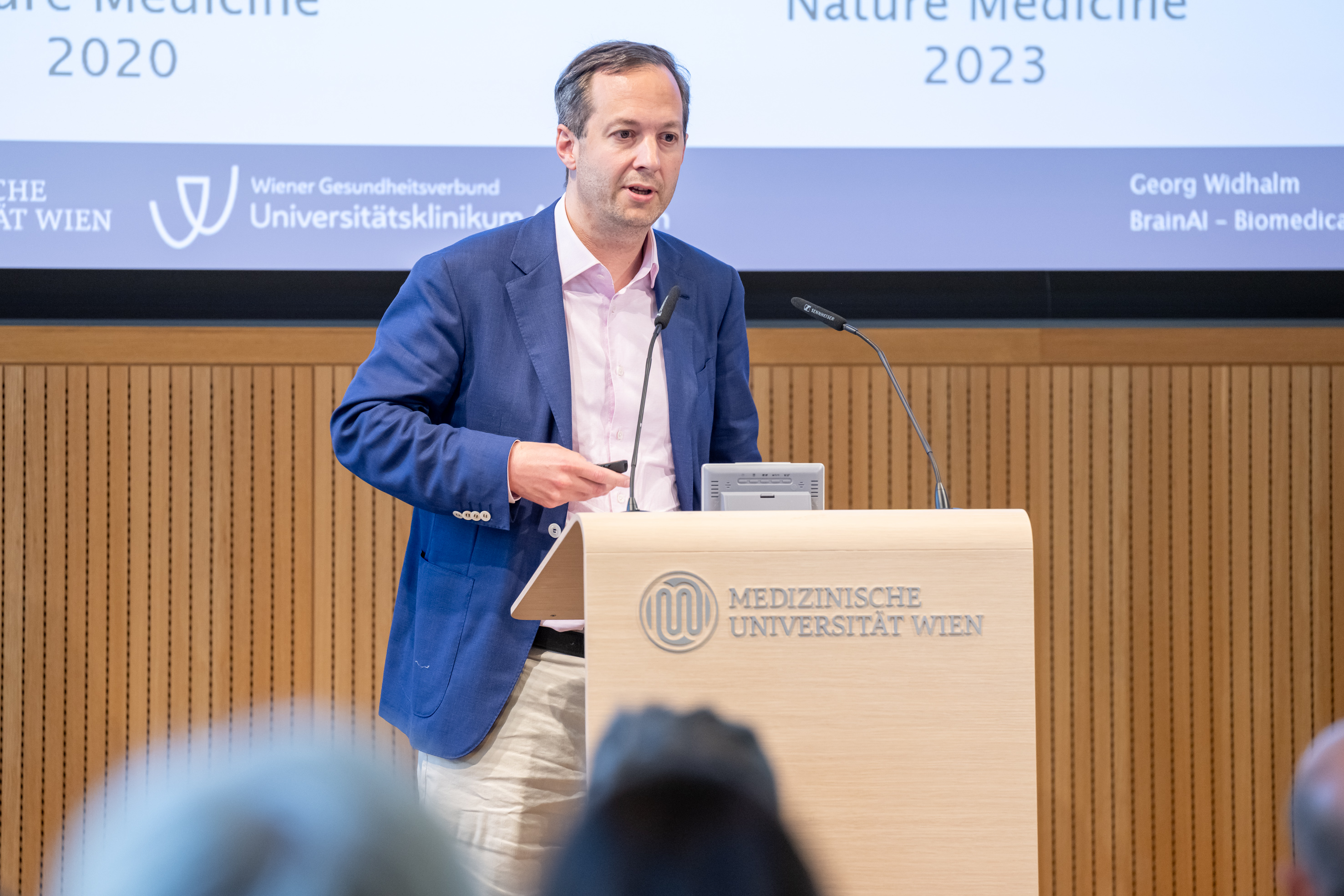
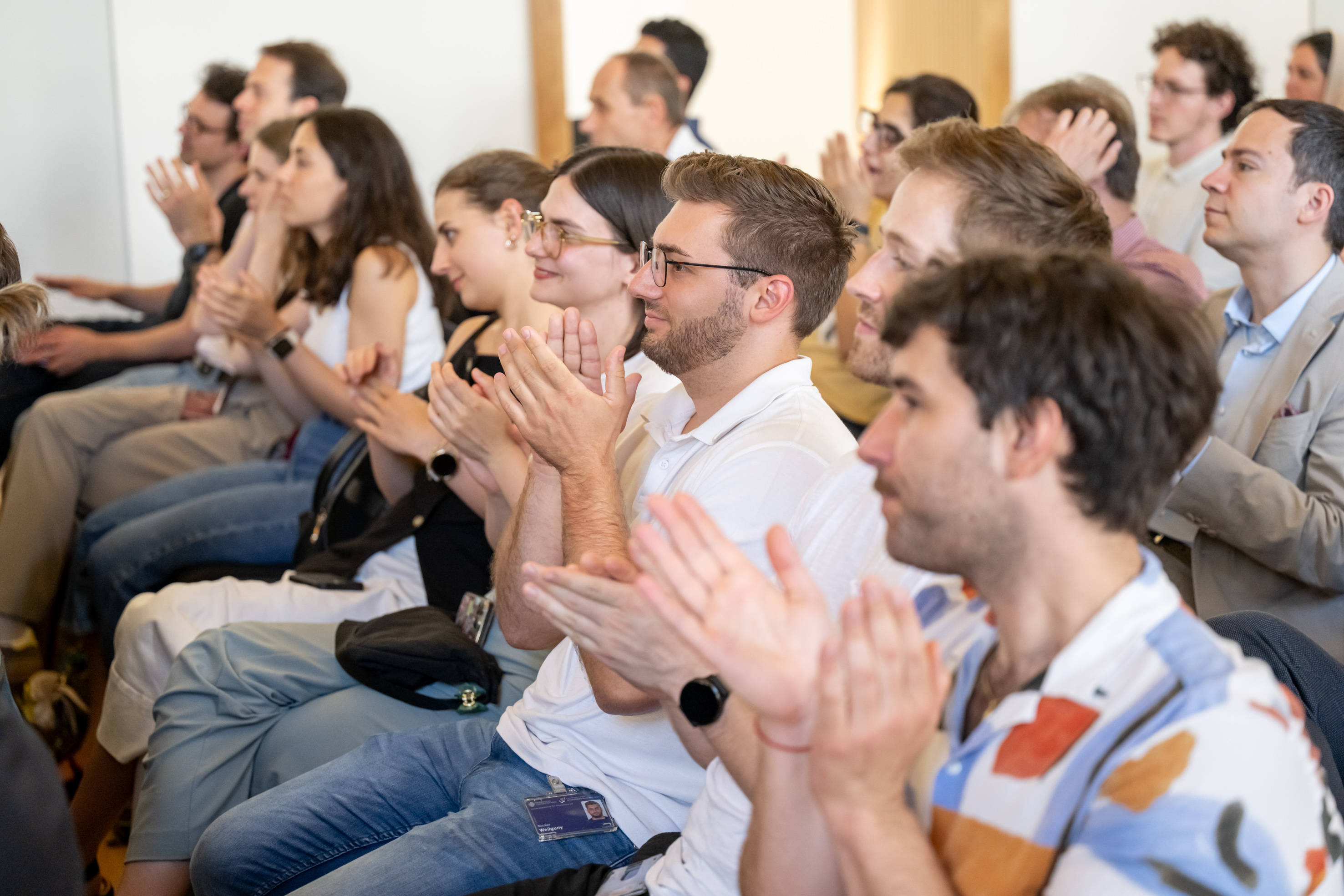
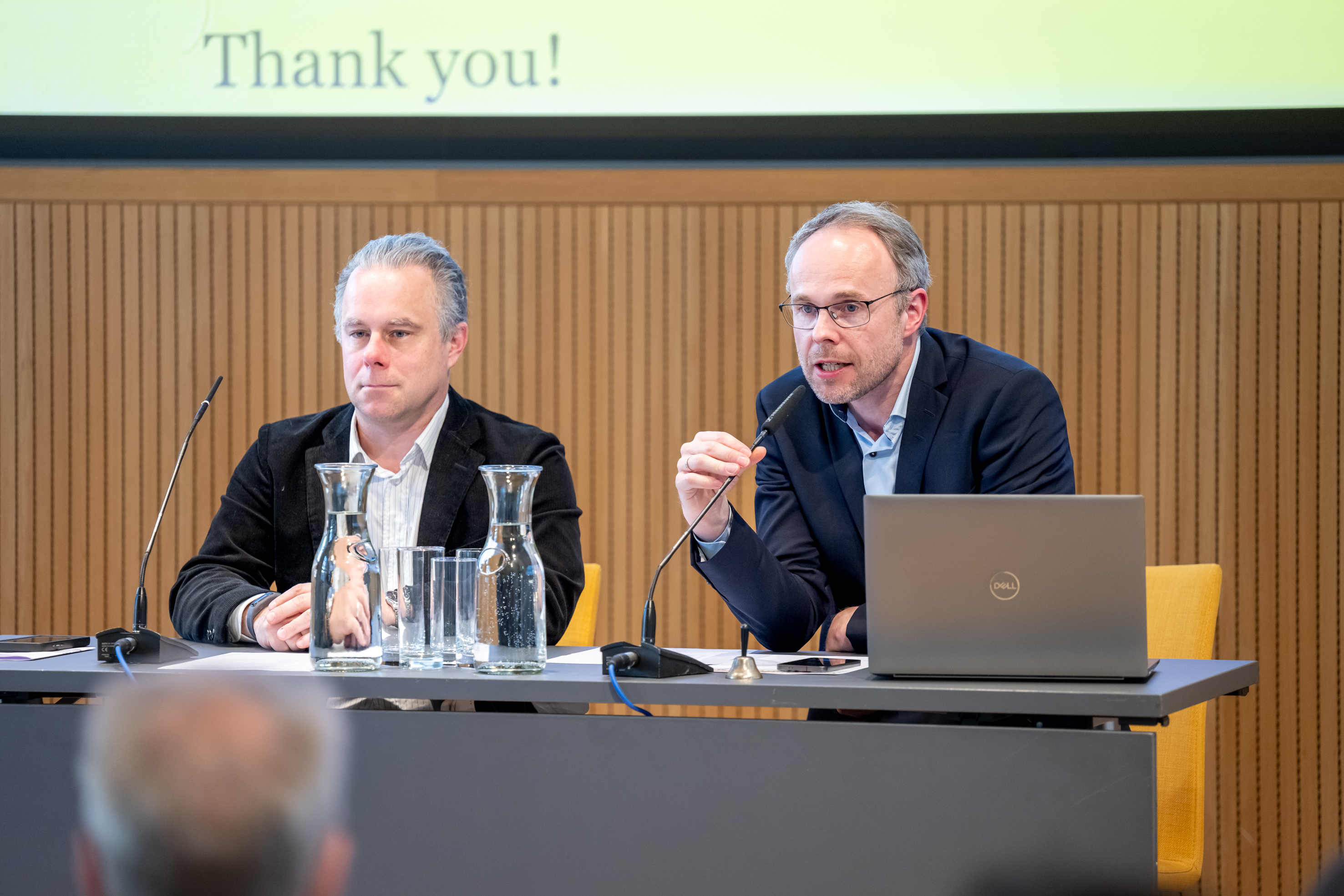
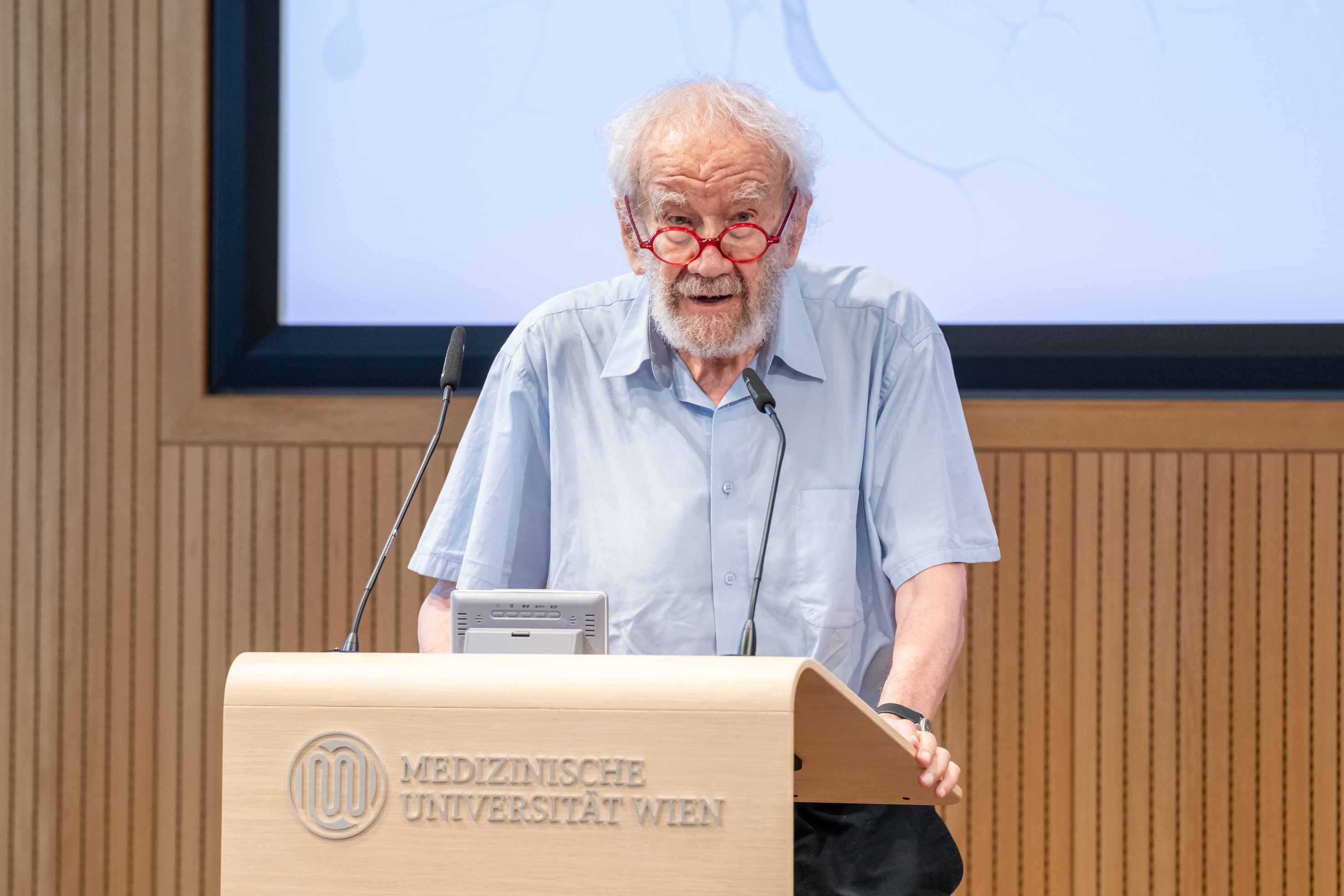
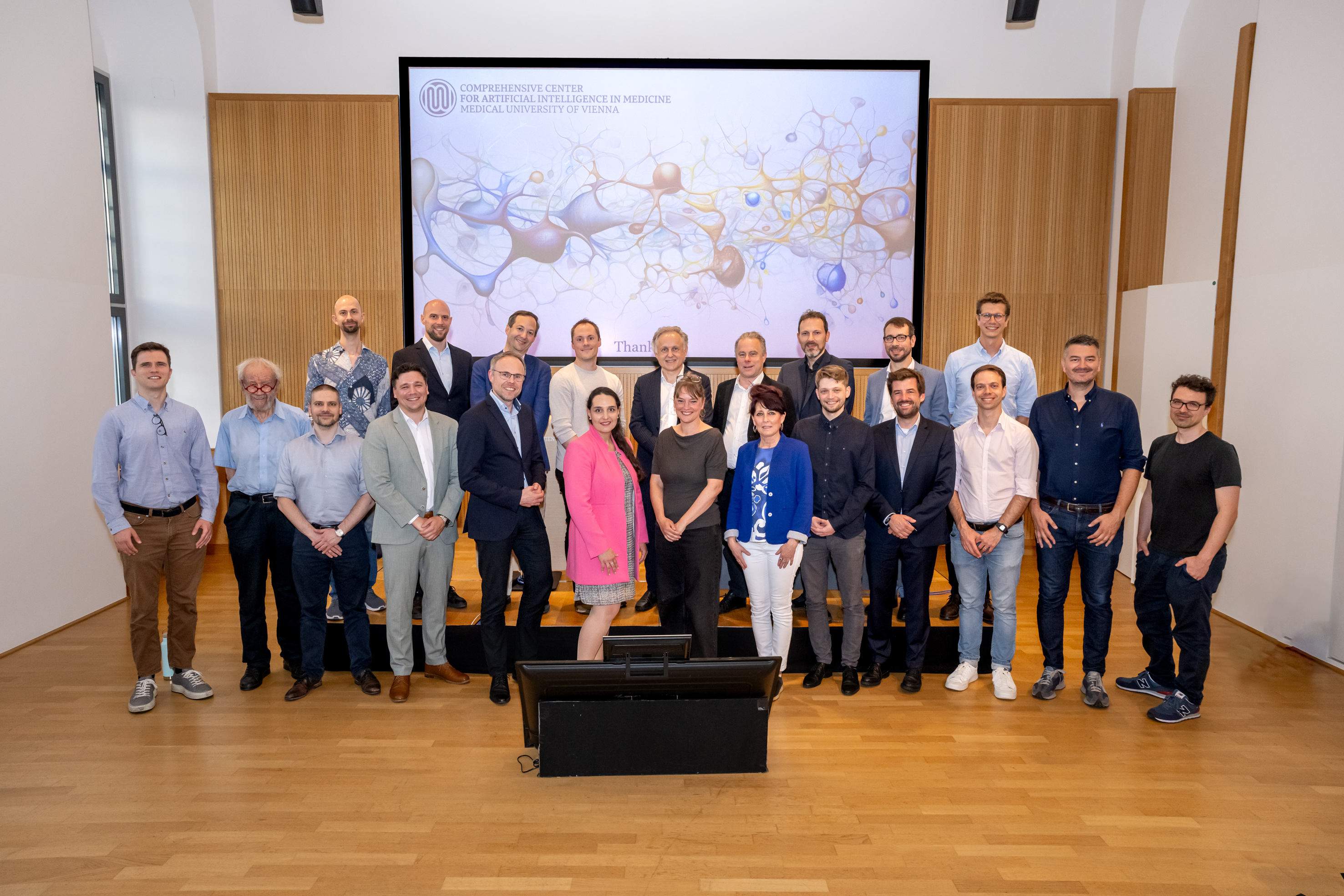
The Comprehensive Center for AI in Medicine will link cutting edge science in the areas of machine learning and medicine across the entire Medical University of Vienna. More than 20 labs are conducting research to improve individual care, to develop novel treatments, and to better understand biological mechanisms of disease and treatment response. The new comprehensive center will give them space to jointly advance innovation and discovery in technology and medicine.
The inaugurial PIs of CAIM. Have a look at the images: Flickr
During the science slam the PIs presented their work and vision for the future:
- Philipp Aichinger described work that enables patients with speech impairment to use AI for augmented and alternative communication.
- Christoph Bock discussed the links between machine learning and synthetic biology, asking if we can programm cells.
- Wolfgang Bogner presented his work on AI based MR reconstruction and asked, if in the future, we can leave out the intermediary of reconstructed images, and instead look for biomarkers at the raw signal level.
- Hrvoje Bogunovic showed how AI enabed screening for and monitoring of retinal diseases, while at the same time making diagnostic technology available to a wider range of the population.
- David Fischer showed the link between AI and the engineering of cells
- Adám Gosztolai discussed how our brains and AI systems solve computational challenges in a distributed manner using encodings in the collective activity of neural populations
- Gerd Heilemann presented work on the use of AI in the analysis of medical imaging data during the preparation of radio therapy
- Harald Kittler & Philipp Tschandl showed work on image analysis in the area of skin cancer that has now resulted in a powerful foundation model enabling a wide research community to tackle research questions in this area.
- Georg Langs discussed machine learning as a means to link modalities from imaging to molecular information, and the need to progress in our ability of artificial reasoning models.
- Ruport Lanzenberger & Manfred Klöbl presented work in the context of psychiatry and neuroimaging, where ML is a key technology to extract quantitative and predictive markers from PET and MRI.
- Roxane Licandro showed results on early life imaging, including the brain development before birth, imaged by MRI, and methods used to model development and changes associated with disease.
- Oliver Kimberger & Lorenz Kapral presented their work on using ML for the analysis of data acquired with extremely high temporal frequency in the intensive care unit. This enables prediction models to predict complications, possibly offering the opportunity of early warning.
- Diana Mechtcheriakova proposed a role for AI in understanding cellular checkpoints, which redirect the physiologically balanced system towards pathological situations.
- Laszlo Papp explained the role of quantum computing and its link to AI in medicine.
- Stanisa Raspopovic presented tools for the treatment of neurologically disabled individuals, and the use of computational models for investigating the nervous system.
- Benedikt Sagl showed applications of ML in dental medicine, and its use in integrating multi-modal data ranging from imaging data to functional measurements.
- Matthias Samwald talked about his extensive work in forming international policy regarding AI.
- Philipp Seeböck showed how ML can be used to detect anomalies, and thereby establish novel interpretable biomarkers that are able to guide treatment decisions.
- Marjan Slak Rupnik explained how ML and biophysics modeling can be used to address functional and medically-relevant questions in pancreas sensory function.
- Stefanie Widder showed applications of ML in systems biology, data science and mathematical modeling with the goal to investigate how microbial and immune interactions alter disease and treatment prognoses.
- Georg Widhalm demonstrated the use of ML for the rapid analysis of tissue samples during neuro surgery, supporting precise surgery, and changing how this information can be used to guide the procedure.